Some Sundays you sit in the pew and the language still works. The songs still land. But most days are not that day. Most days you pray into what feels like an empty room, and you go on believing the room isn't actually empty, because you were told it isn't, because you've felt it before and assume you'll feel it again. Maybe it's the diagnosis nobody has said out loud yet, or the marriage gone civil and cold, or just the accumulating tiredness of showing up to a life that no longer surprises you. In the meantime there is only the walking. The commute, the group text, the grief you haven't named yet, the sense that if God is here he is being unusually quiet about it.
This is not a new complaint. It is the oldest one two disciples ever carried down a dusty road out of Jerusalem.
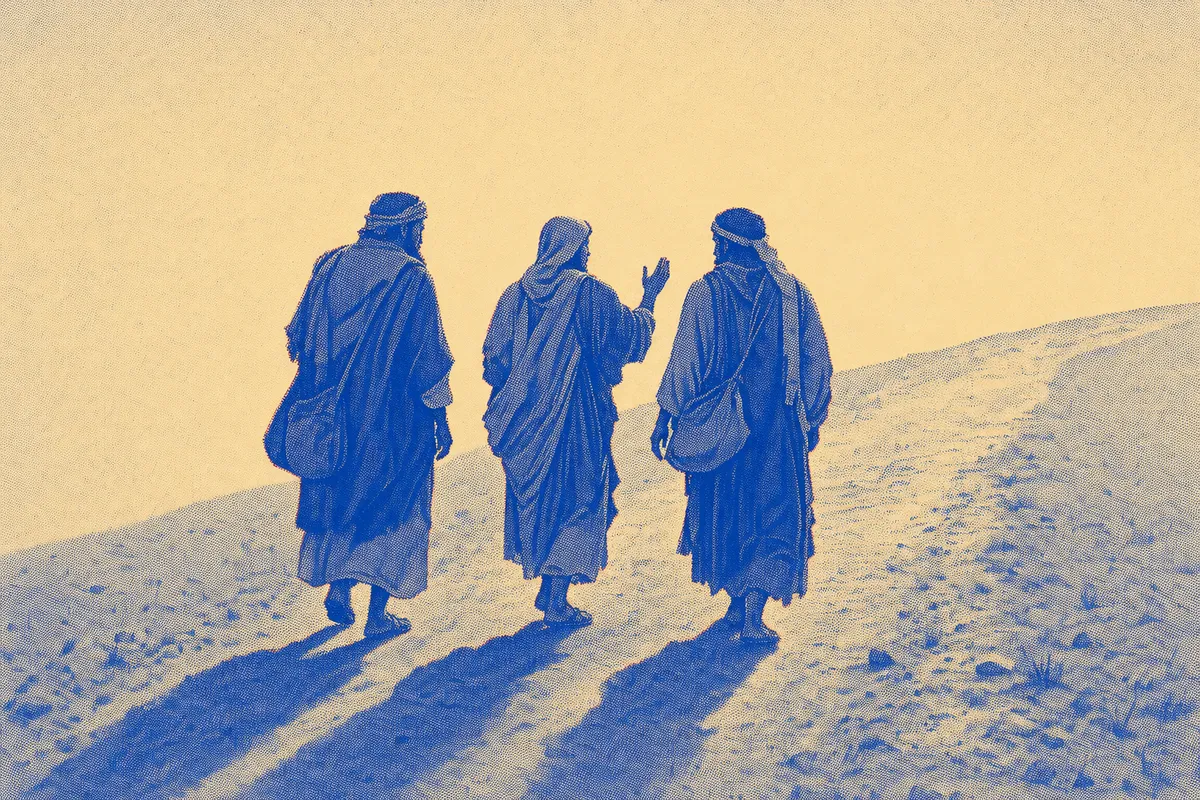
That same day two of them were going to a village called Emmaus, about seven miles from Jerusalem. They were talking with each other about everything that had happened. And as they talked and deliberated, Jesus Himself came up and walked along with them. But their eyes were kept from recognizing Him. Notice the order. He does not appear to them in glory and demand they catch up. He falls into step beside two grieving men and lets them keep talking. He is willing to be mistaken for a stranger.
What if he was never absent, only unannounced?
He asks what they're discussing before he tells them anything. He lets Cleopas explain the crucifixion to him, badly, in the confused shorthand of someone still in shock, still hoping the women's report of an empty tomb might mean something and not yet believing it does. Jesus, who could correct this in a sentence, listens to the whole account first. Only then does he open Moses and the Prophets and walk them, verse by verse, through why the suffering had to come before the glory. Hours pass this way. A full afternoon of hidden company. Whatever recognition costs, it apparently isn't quickness of feeling. John Bunyan has a pilgrim named Faithful say something almost identical about a hard stretch of his own road: "I did not know him at first, but as he went by, I perceived the holes in his hands and in his side; then I concluded that he was our Lord." Recognition, in both stories, comes late and comes through the wounds, not before them.
As they approached the village where they were headed, he seemed to be going farther, and they had to press him to stay. So He went in to stay with them. While He was reclining at the table with them, He took bread, spoke a blessing and broke it, and gave it to them. Then their eyes were opened and they recognized Jesus. It is worth sitting with how ordinary the gesture is. Not a vision. Not a voice from heaven. A guest taking bread at a table, the way any guest might, the way he had done at that same table only days before with twelve other men who also failed, for a while, to understand what they were looking at.