By noon you have taken in a great deal. Headlines, messages, a podcast on the drive, a stranger's opinion about another stranger's trouble, a video you did not choose and did not finish. None of it was wicked. Much of it was even useful. And still, by evening, you notice it: you have consumed all day and been fed by none of it.
That is a particular kind of tiredness. It is not the ache of having too little. It is the dullness of having taken in too much of what cannot nourish. You reach for more because reaching has become a habit, and the more arrives, and the hollow stays exactly the size it was. Some nights you could not say what you are hungry for. You only know that the next thing on the screen is not it.
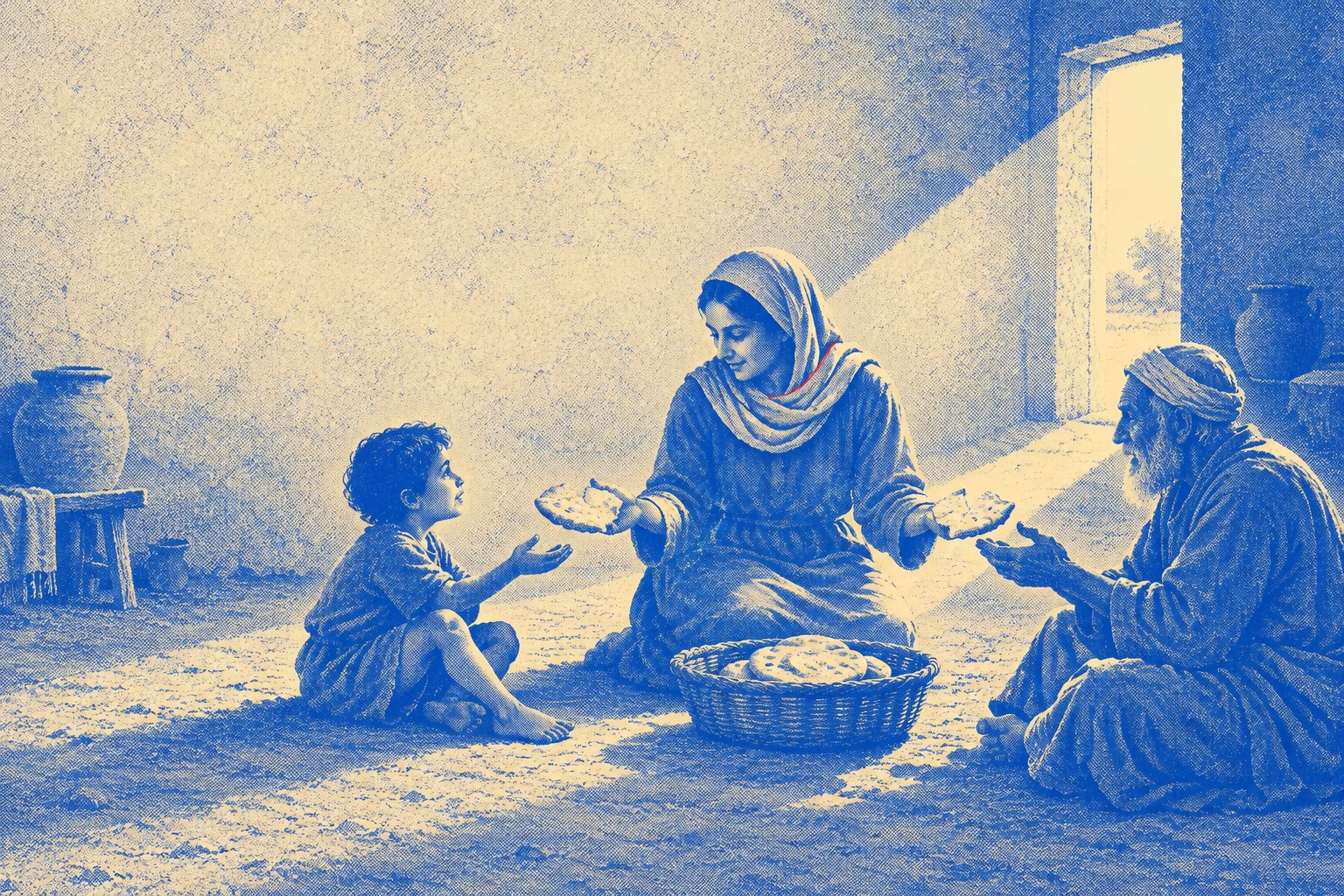
The crowd in John 6 knows something about this. They have already eaten once at Jesus' hand, and now they are talking about Moses and the bread from heaven as if the question were simply one of supply. Who provided, and how much, and when will it come again? Jesus does not scold them for being hungry. He widens what they think bread is. "Truly, truly, I tell you, it was not Moses who gave you the bread from heaven, but it is My Father who gives you the true bread from heaven. For the bread of God is He who comes down from heaven and gives life to the world."
Read that slowly. The bread they remember was real, but it was the lesser thing. There is a true bread, and it is being given now, in the present tense, by a Father. And notice what the bread is. It is not a thing that comes down. It is "He who comes down."
The crowd hears only half of this, and their answer is the most recognizable line in the chapter. "Sir," they said, "give us this bread at all times." It is a sincere request. It is also the request we make of every feed we scroll and every pile we mean to get through: keep it coming, never let it run out. They want a supply that does not end. They have not yet understood that they are being offered a person.
So Jesus answers them with one. "I am the bread of life. Whoever comes to Me will never hunger, and whoever believes in Me will never thirst."
He does not say, I will give you bread. He says, I am. That changes what you are asked to do. Consuming is something you do to a thing, and you can keep doing it all day without ever being changed by it. Coming is something you do toward someone. Believing is trust placed in someone. The verbs Jesus chooses are movement and trust, and neither of them is intake. Part of why you can be full and unfed is that you have been treating your hunger as a problem of volume, when it is a problem of direction.