Casting all your care upon Him, for He cares for you.
1 Peter 5:7 (NKJV)
πᾶσαν τὴν μέριμναν ὑμῶν ἐπιρίψαντες ἐπ' αὐτόν, ὅτι αὐτῷ μέλει περὶ ὑμῶν.
EU•AN•GE•LION (YOO-AN-GEL-EE-ON) · εὐαγγέλιον — Good News
EUANGELION is a product of WokeGod LLC. Copyright © 2026 WokeGod LLC. All rights reserved.v0.8.37TermsPrivacyCookie PolicyCommunity GuidelinesContent Disclaimer
EU•AN•GE•LION (YOO-AN-GEL-EE-ON) · εὐαγγέλιον — Good News

Discovering that God’s care sustains us through suffering, not around it
1 Peter 5:7
Opening
Casting all your care upon Him, for He cares for you.
1 Peter 5:7 (NKJV)
πᾶσαν τὴν μέριμναν ὑμῶν ἐπιρίψαντες ἐπ' αὐτόν, ὅτι αὐτῷ μέλει περὶ ὑμῶν.
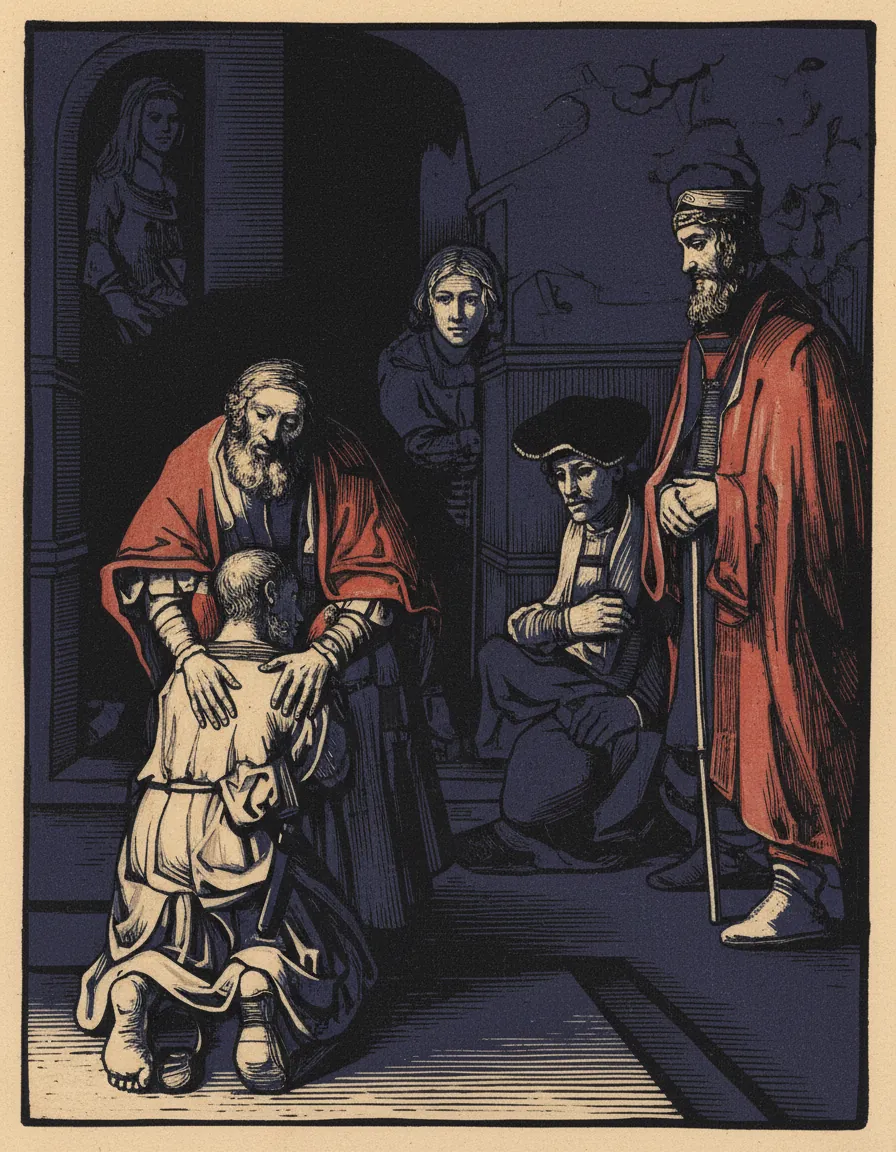
“The Prodigal Son Amid the Swine” — Albrecht Dürer, c.1496
Casting our cares on God is not a passive act of surrender. It is a forceful, deliberate transfer of burdens to the One who is strong enough to carry them.
After two years of rehabilitation, something began to shift in Joni Eareckson Tada. Christian friends visited regularly, sharing Scripture and praying with her. Slowly, she began to see glimpses of hope piercing through her despair.
Peter wrote his letter to Christians facing persecution, social ostracism, economic hardship, and physical danger. His command to cast all anxiety on God was not theoretical advice from a comfortable armchair. It was a battle-tested instruction for people in real crisis.
The Greek word for ‘casting’ (epiripsantes) is vivid and physical. It was used for loading heavy burdens onto pack animals. This is not the language of gentle suggestion. It is the language of heaving a crushing weight off your shoulders and throwing it onto someone strong enough to carry it.
And the reason Peter gives is stunning in its simplicity: because He cares for you. The Greek word melei describes the careful, constant attention a shepherd gives to sheep. God’s care is not occasional or conditional. It is continuous, active, and deeply personal.
After two years of rehabilitation, something began to shift in Joni Eareckson Tada.
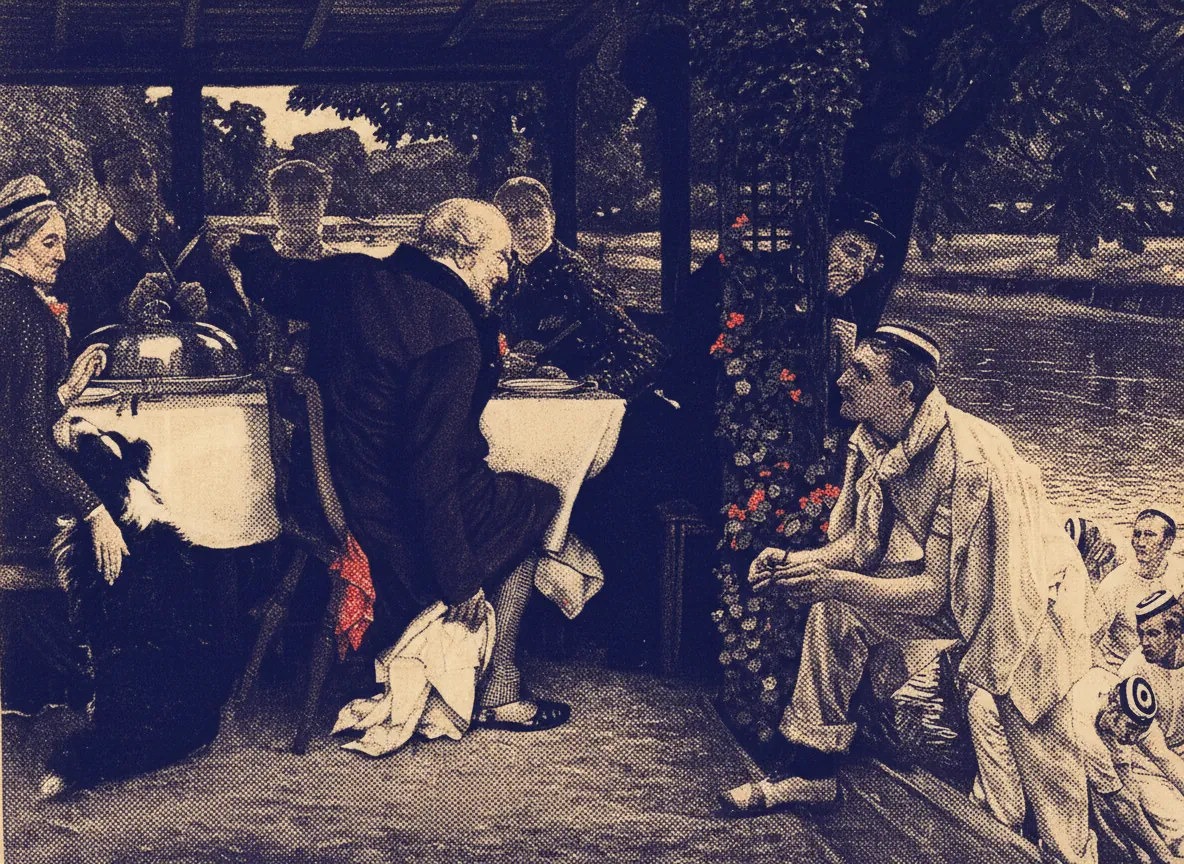
“The Prodigal Son in the Modern City” — James Tissot, 1882
Brushstrokes of Hope
Joni’s turning point was not a single dramatic moment but a slow awakening. As Christian friends sat beside her hospital bed week after week, their presence began to communicate something her broken body could not understand on its own: God had not abandoned her.
She began learning to paint by holding a brush in her mouth. The first attempts were crude, frustrating, humbling. But each brushstroke was an act of defiance against despair, a small declaration that beauty could still emerge from brokenness.
Joni discovered that limitations do not eliminate purpose. They redirect it. God’s care for her did not prevent suffering, but it sustained her through it. Her wheelchair did not remove her from God’s love. It became the place where she experienced that love most deeply.
Joni’s slow awakening shows that turning points often arrive not as lightning bolts but as gradual shifts, as we begin to trust that God’s care is real even when our circumstances remain unchanged.
The Divided Mind
The Greek word for anxiety, merimna, comes from merizo (to divide) and nous (mind). Anxiety literally fragments our thinking, pulling our minds in multiple directions and preventing clear thought. It is the opposite of the wholehearted trust Proverbs 3:5 commanded on Day 1. Peter understood this fragmentation personally. He was the disciple who tried to walk on water but became divided between faith and fear. He was the one who declared undying loyalty to Jesus and then denied Him three times. Peter knew what a divided mind felt like. That is why his instruction to cast all our cares on God carries such weight. He is not offering untested theology. He is sharing hard-won wisdom from a life of spectacular failures transformed by grace. When Peter says God cares for you, he speaks as someone who experienced that care at his lowest point.
HISTORICAL CONTEXT
Peter wrote this letter to Christians scattered throughout Asia Minor (modern Turkey) who were facing increasing persecution. His command to cast anxieties on God was addressed to people with real, life-threatening concerns.
The word merimna (anxiety) literally means ‘divided mind.’ Ancient Greek thinkers recognized that worry does not just make us uncomfortable; it fractures our ability to think, decide, and act with clarity.
BRIDGE TO CHRIST
ANCIENT TRUTH
Peter commanded persecuted first-century Christians to hurl their anxieties onto God with the force of loading a burden onto a pack animal, trusting His shepherd-like care.
Whether the anxiety is a first-century Christian fearing Roman persecution or Joni Eareckson Tada facing lifelong paralysis, the solution remains the same: a decisive transfer of our burdens to the God who genuinely cares.
MODERN APPLICATION
Our anxieties may look different from those of persecuted believers, but the fragmentation they cause in our minds is identical. God’s invitation to cast our cares on Him is just as urgent today.
NEW TESTAMENT ECHO
Jesus Himself said: ‘Come to me, all you who are weary and burdened, and I will give you rest.’ (Matthew 11:28) The invitation to cast our cares is rooted in Christ’s own words.

“Sym Star Eight Point Etched” — Christopher James Parker + AI, to God be the Glory, 2026
REFLECT
What anxieties are you carrying that you need to cast upon God today?
PRAYER
Posture: release
Lord, I cast all my cares upon You. I name them now: the fears I carry about the future, the pain I hold from the past, and the anxieties that divide my mind today. I hurl them onto You with the full force of my need, trusting that You are strong enough to carry what I cannot. Help me believe that Your care for me is constant, active, and personal, even when my circumstances seem to say otherwise. Amen.
IN YOUR OWN WORDS

“Obj Prayer Shawl Folded” — Christopher James Parker + AI, to God be the Glory, 2026
TAKEAWAY
Today I will write down three specific anxieties on paper, pray over each one, and then physically set the paper aside as a tangible act of casting my cares on God.
LEAVING AT THE CROSS
RECEIVING FROM THE CROSS
CHECK YOUR UNDERSTANDING
FOR REFLECTION
FOR ACCOUNTABILITY PARTNERS
FURTHER READING
RELATED SCRIPTURES
Matthew 11:28
Come to me, all you who are weary and burdened, and I will give you rest.
Philippians 4:6-7
Do not be anxious about anything, but in every situation, by prayer and petition, with thanksgiving, present your requests to God.
FOR DEEPER STUDY
Read the full letter for Peter’s encouragement to suffering believers
Finished reading? Mark this day read.
BEFORE YOU GO
Anything you want to keep from today?
EUANGELION is a product of WokeGod LLC. Copyright © 2026 WokeGod LLC. All rights reserved.v0.8.37TermsPrivacyCookie PolicyCommunity GuidelinesContent Disclaimer