They devoted themselves to the apostles' teaching and to fellowship, to the breaking of bread and to prayer.
Acts 2:42 (NIV)
EU•AN•GE•LION (YOO-AN-GEL-EE-ON) · εὐαγγέλιον — Good News
EUANGELION is a product of WokeGod LLC. Copyright © 2026 WokeGod LLC. All rights reserved.v0.8.37TermsPrivacyCookie PolicyCommunity GuidelinesContent Disclaimer
EU•AN•GE•LION (YOO-AN-GEL-EE-ON) · εὐαγγέλιον — Good News
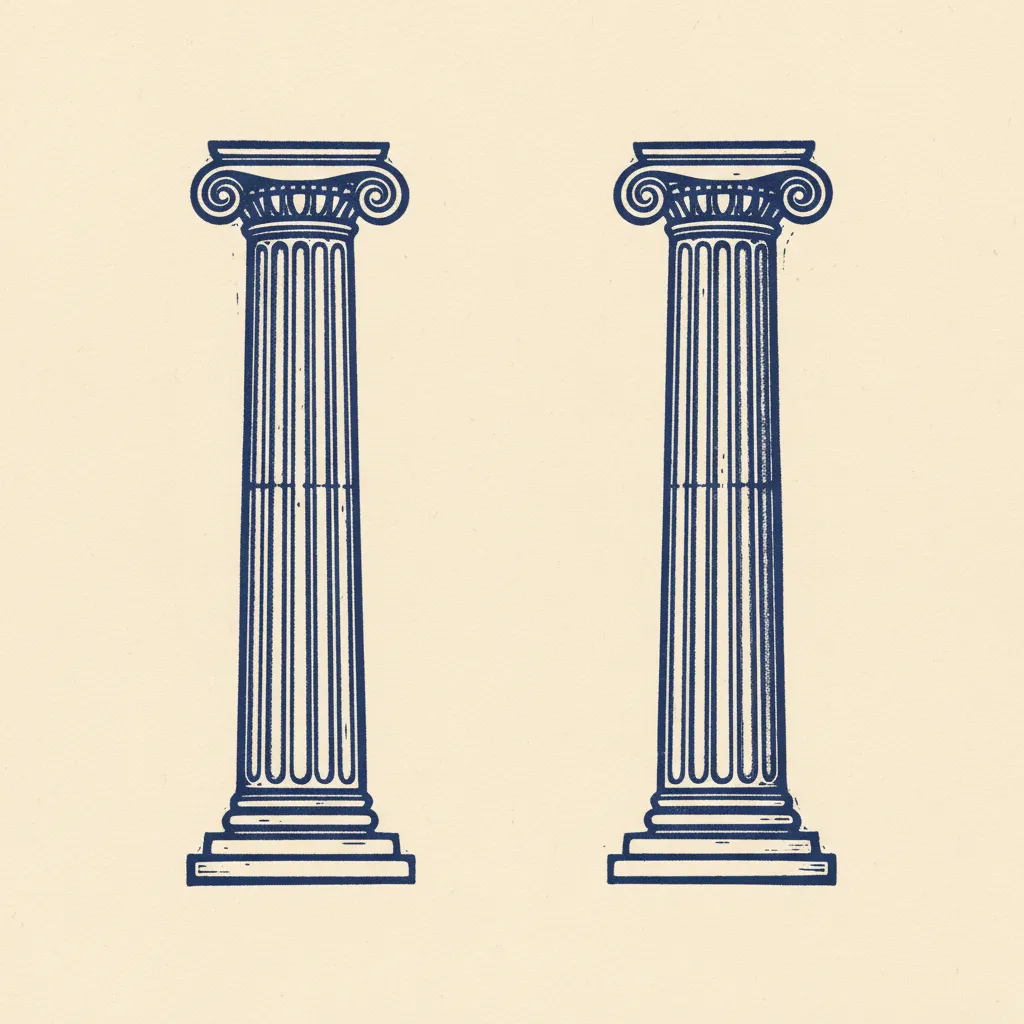
The four load-bearing commitments of a healthy church: teaching, fellowship, breaking of bread, and prayer
Acts 2:42
Opening
They devoted themselves to the apostles' teaching and to fellowship, to the breaking of bread and to prayer.
Acts 2:42 (NIV)
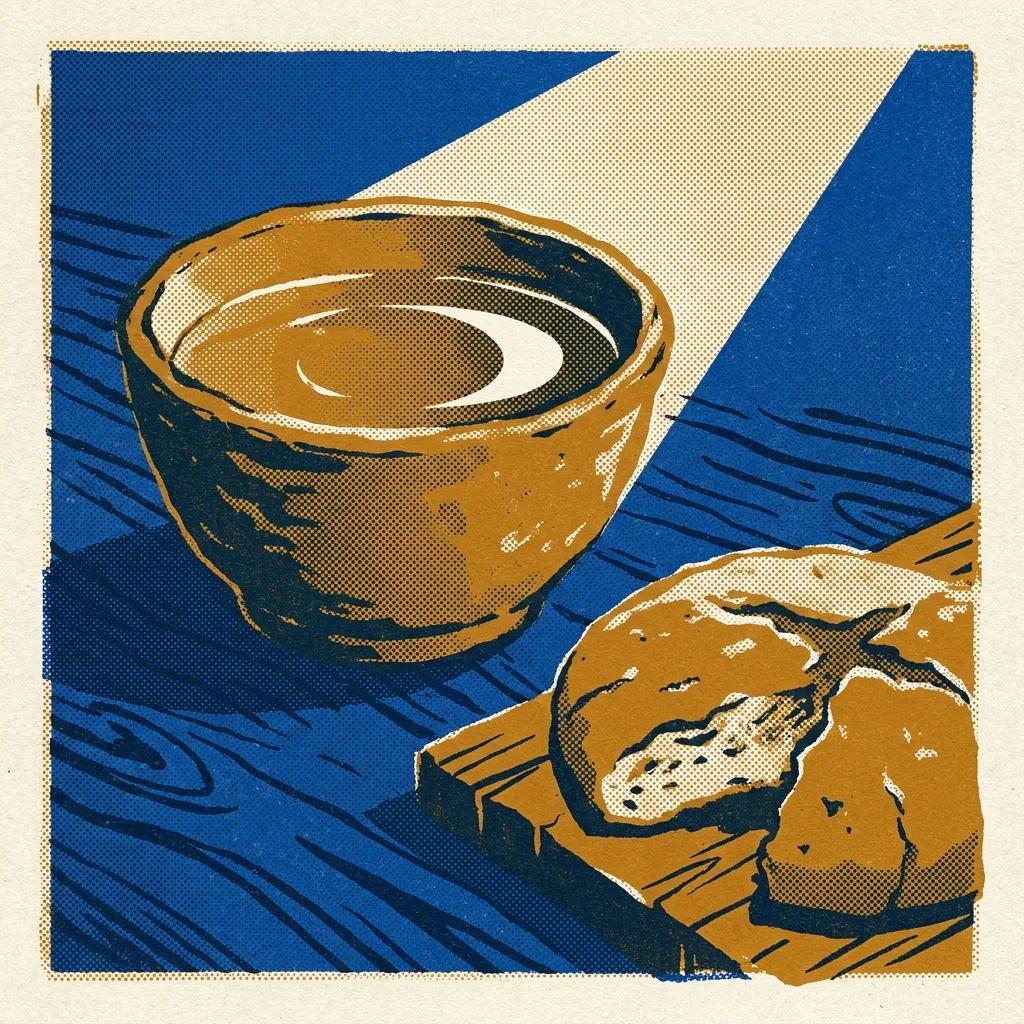
“Obj Clay Bowl Bread Water” — Christopher James Parker + AI, to God be the Glory, 2026
When any of these pillars is sidelined, we drift. The Spirit forms a people before He sends a movement.
The four pillars of Acts 2:42 are not optional extras. They are the load-bearing beams of a healthy church.
1. The Apostles’ Teaching – A Shared Truth: The early believers did not rely on vibes or inspiration. They anchored themselves in the apostles’ teaching – the authoritative witness to Jesus’ life, death, resurrection, ascension, and return. Today, this means devotion to Scripture, not as information but formation. A community built on opinions becomes unstable. A community built on the Word becomes unshakeable.
2. Fellowship (Koinonia) – A Shared Life: This is an all-in, covenant partnership. Not casual friendliness. Not occasional attendance. But risking your life and heart with others because Christ has bound you together. Koinonia means we carry each other’s burdens, meet each other’s needs, and stand together in faith and suffering.
3. Breaking of Bread – A Shared Table: This refers both to communal meals and to the Lord’s Supper. In both cases, the table becomes a place of presence – remembering Jesus, extending hospitality, healing divisions, and celebrating grace. In Acts, meals are not filler. They are formation.
4. Prayer – A Shared Dependence: The early church did not pray as ritual. They prayed as oxygen. Their prayer life was not minimal or perfunctory. It was continuous, communal, expectant, and bold. Prayer was not an add-on. It was the engine.
The Moravians of Herrnhut (Part 4)
After the 1727 outpouring in Herrnhut, something remarkable happened. The unity they prayed for began to take shape in the ordinary rhythms of daily life. Families started opening their homes to one another. People shared meals and read Scripture at their kitchen tables. Disputes that once lingered for months were resolved in days. Widows and orphans were cared for without needing to ask. When one family suffered loss, others brought food, money, or simply their presence.
The community began organizing daily gatherings where Scripture was taught, hymns were sung, and prayers were offered. These were not polished services. They were simple and sincere. What mattered was not performance but presence – God’s presence, and the presence of brothers and sisters who saw one another as gifts, not inconveniences.
One resident wrote that before 1727, Herrnhut felt like ‘neighbors surviving near one another.’ After 1727, it felt like ‘a family formed by God.’ People who once avoided each other now greeted one another with warmth. Hospitality became spontaneous. Acts of generosity became common. Visitors often remarked that simply walking through the village made them feel strangely at peace, as if they had entered a place where heaven and earth were not as far apart as usual.
They were not trying to ‘copy’ the early church. They simply obeyed Christ, loved one another, and prayed continually – and the result was a shared life that looked suspiciously like Acts 2:42-47. They discovered that community is not built by charisma or programs. It is built by devotion, repentance, prayer, and shared life. A blueprint already existed, and the Spirit helped them walk into it.
Spiritual community is not complicated. It is costly. But when people center their lives on Jesus and one another, the Spirit does the heavy lifting.
“Sym Bread Loaf Burgundy Linocut” — Christopher James Parker + AI, to God be the Glory, 2026
REFLECT
Which of the four pillars is strongest in my life, and which is weakest? What would it look like for the Spirit to bring balance?
TAKEAWAY
Text or message one believer and simply say: ‘If you ever need prayer, support, or help this week, I’m here.’ This is the beginning of koinonia – choosing to carry someone’s burden.
PRAYER
Posture: petition
Lord, make me a person who lives the blueprint of Acts 2. Shape my life around Your Word, Your people, Your table, and prayer. Build these rhythms in me, not by striving but by Your Spirit. Make my life part of a community that shines with Your love. Amen.
IN YOUR OWN WORDS
Finished reading? Mark this day read.
BEFORE YOU GO
Anything you want to keep from today?
EUANGELION is a product of WokeGod LLC. Copyright © 2026 WokeGod LLC. All rights reserved.v0.8.37TermsPrivacyCookie PolicyCommunity GuidelinesContent Disclaimer