HOW TO READ · 2026-08-21
The day's guides
Method
The Whole of Mark, in One Sitting
The shortest Gospel takes about ninety minutes aloud, and it was built for exactly that.
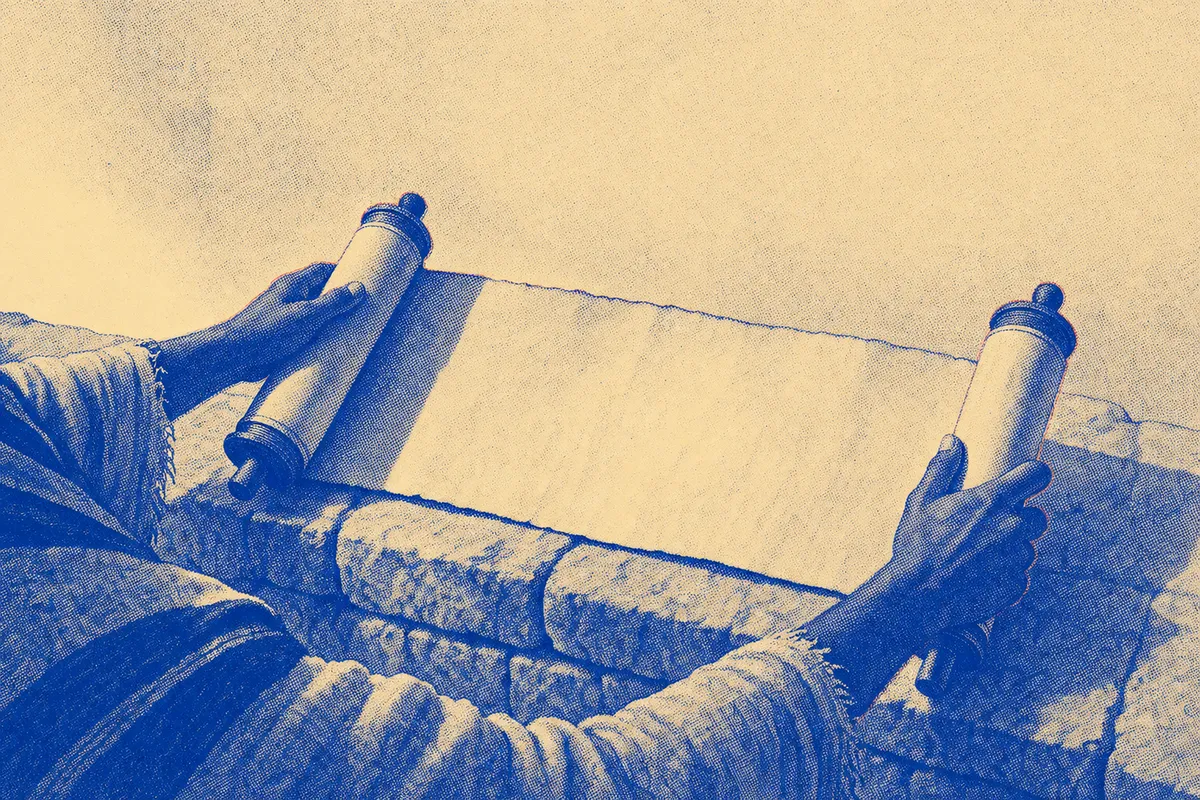
Most of us have never read a book of the Bible the way its first audience received it. We take Scripture in fragments — a paragraph with coffee, a verse on a lock screen. But Mark runs about eleven thousand words. Read aloud at an unhurried pace, that is roughly ninety minutes, and it was almost certainly composed for exactly that: one reader, one room, one evening.
Reading it whole changes what you can see. Mark's favorite word is 'immediately' — it appears more than forty times — and at verse-a-day speed the word is just a tic. At full speed it becomes the engine. The crowds press in, the demons interrupt, the disciples misunderstand, and the whole story tilts toward Jerusalem with a momentum no excerpt can carry.
The setup matters less than you'd think, but three choices help. Clear a real block of time, because a hard stop breeds clock-watching. Use a translation you don't normally read, so familiar phrases can't glide past on habit. And read aloud if your household allows it — Mark's Greek is rough, urgent, spoken language, and your ear will catch what your eye skims.
Then the hard part: don't annotate. No underlining, no cross-references, no pausing to look something up. The fragment habit dies hard, and the urge to stop and study is mostly the urge to regain control of the text. Let it run. If a phrase snags you, notice the snag and keep going. You can come back tomorrow; tonight the assignment is the shape of the whole.
That shape is the reward. Structures invisible at close range come forward: two blind men healed, one on either side of the long middle stretch where the disciples cannot see who Jesus is. Three predictions of the cross, three failures to understand. An ending so abrupt — frightened women, an empty tomb, silence — that later scribes kept trying to fix it.
Do this once and the rest of the shelf reorganizes itself. Galatians is twenty minutes. Jonah is ten. Genesis is a long evening. None of them were written to be sipped.
- Clear ninety minutes, phone in another room.
- Choose a translation you don't usually read.
- Read straight through, aloud if you can.
- Mark nothing; notice snags and keep moving.
- Next morning, write one sentence on what surprised you.
4 MIN
Tools
A Concordance Is Just an Index
One free reference book lets you follow a single word across the whole of Scripture — no Greek required.

A concordance is not a scholar's tool. It is an index — every word in the Bible, listed alphabetically, with every verse where it appears. James Strong finished the famous one in 1890 with a team of about a hundred colleagues, and its whole apparatus is now free at sites like Blue Letter Bible. You do not need Greek or Hebrew to use it. You need one word that has stopped you.
Say the word is 'meek,' from 'Blessed are the meek.' In a concordance keyed to Strong's numbers, the English word carries the tag G4239 — praus. That number is a handle: follow it, and you get every place the Greek word occurs, whatever English the translators chose. Suddenly the same word describes Jesus riding into Jerusalem on a donkey and turns up in Peter's counsel about a gentle, settled spirit. 'Meek' stops sounding like 'mousy' because you have watched it work.
The method, then: pick one word from a verse you are already sitting with. Find its number. Pull up the full list of occurrences and actually read five or six of them — not the bare verses, but the paragraphs around them. Usage is the meaning. A word means what its speakers use it to do, not what its ancient root once suggested.
That last sentence guards against the classic misuse. You may have heard that dunamis, the New Testament word for power, gives us 'dynamite,' as if Paul had explosives in mind. He didn't; dynamite arrived eighteen centuries later. Etymology makes thrilling sermons and bad reading. The concordance, used honestly, is the antidote — a plain list of actual occurrences will not let a clever gloss survive.
One further discipline: write down what the word cannot mean. After five contexts you will usually find the exciting definition you hoped for is too narrow or too modern. That negative knowledge is real progress; most bad interpretation is a word being asked to carry freight it never carried.
Total cost: nothing. Total time: twenty minutes. And the verse you started with is permanently anchored to a hundred other places instead of floating alone.
- Pick one word from a verse that stops you.
- Find its Strong's number at blueletterbible.org.
- Pull every occurrence of the original word.
Practice
The Page You Want to Skip
Copy it out, name the offense, and stay — the passages that repel you are doing more work than the comfortable ones.

Every serious reader of the Bible eventually hits a passage that repels them. Psalm 137 blesses whoever seizes Babylonian infants. The conquest chapters of Joshua read like orders for annihilation. Jesus calls a desperate Gentile mother a dog, or near enough. The common responses are to skip the page, or to reach quickly for an explanation that makes the trouble disappear. Both moves treat the text as too fragile to survive your honesty.
Try this instead: copy the offending passage out by hand. Not because handwriting is sacred, but because it is slow. Copying forbids the skim and the flinch alike. Somewhere mid-sentence you will find you are actually reading the words, perhaps for the first time, rather than reacting to your memory of them.
Then name the offense precisely, in one written sentence. Precision usually redraws the problem. With Psalm 137, the difficulty is not that God orders violence — nothing in the psalm says he does — but that a shattered exile hands God his rage in prayer, unedited. That is a different problem, and arguably a more useful one: it asks what your own prayers do with your worst wishes.
Next, check the machinery of the text. Who is speaking — God, a narrator, a character, a poet? To whom, and in what genre? A lament is not a law. A description is not an endorsement. The Bible records a great deal that it does not recommend, and a surprising amount of the offense dissolves — not all of it — once speaker and genre are sorted.
For what remains, find company. You are not the first reader to choke on this page. Gregory of Nyssa agonized over the death of Egypt's firstborn in the fourth century. The rabbis argued the conquest texts for a thousand years. Reading one older wrestler — a commentary, a sermon, a midrash — converts your private scandal into a long conversation, and a conversation is easier to stay inside.
Last, let it stand unresolved. Write the reference on a card and return in a month. Some passages soften; some never do. But a Bible that only ever agreed with you would be a mirror, and you already have one of those. The offense is often the evidence that someone other than yourself is speaking.
- Copy the offending passage out by hand.
- Name the offense in one written sentence.
Back to today's paper →