HOW TO READ · 2026-08-30
The day's guides
Tools
Put the Bible in Your Ears
For most of its history the text was heard before it was read alone, and your commute can stand in for the room it was written to fill.
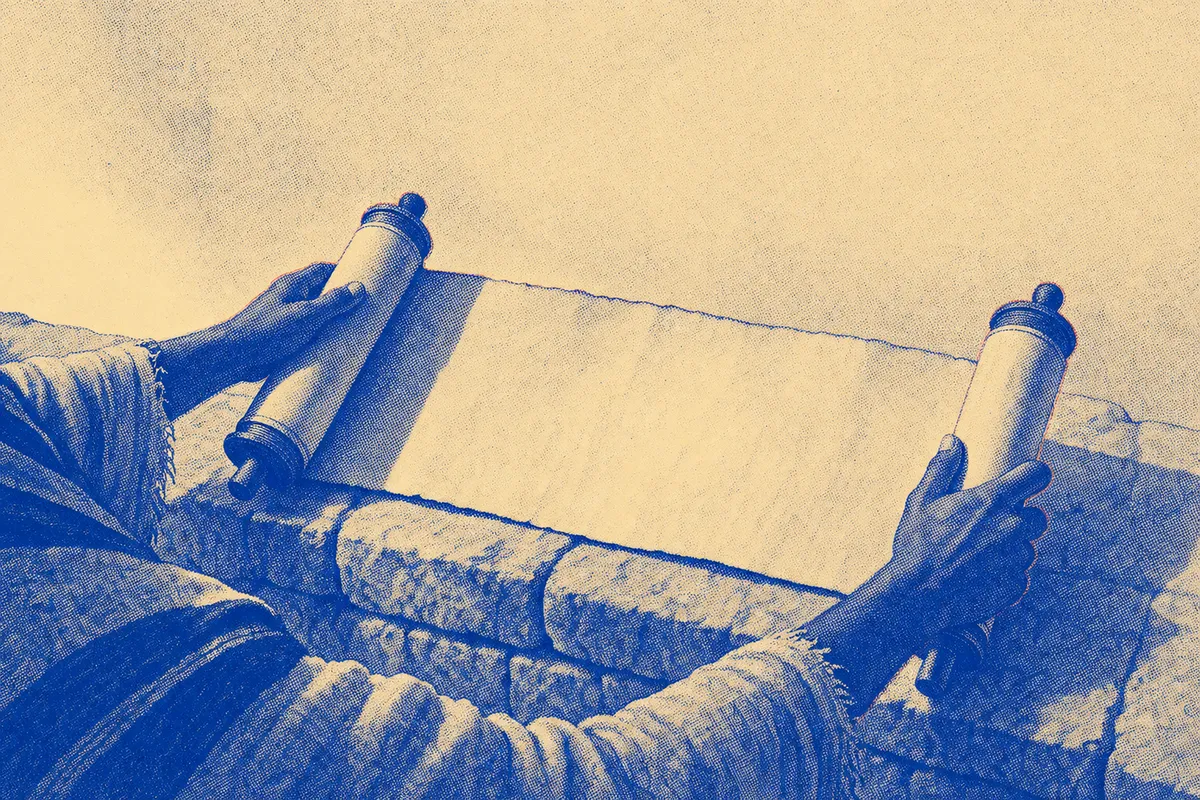
Almost nobody in the ancient world owned a personal copy of scripture. They knew it because someone read it aloud in a room full of other people, and they listened the way you listen to a letter being read to you — once, at speaking pace, with no way to pause and reread a hard sentence. That's a different kind of attention than the one we bring to a page, and it's worth recovering on purpose.
The easiest way in is audio. Pick a single-narrator recording over a full-cast dramatized one for your first listen — the dramatized versions are already interpreting for you, deciding through casting and music which lines are tender and which are threatening. A plain voice reading it straight leaves more of that work to you.
Load a whole book, not a fragment. A three-minute devotional clip trains you to expect scripture in bite sizes; an hour of Isaiah or Acts trains your ear to hear argument and narrative built at their actual scale. This works especially well for the parts you've never finished reading — the long prophetic books, the genealokies-adjacent stretches of Numbers, the back half of Acts.
Do it while your hands and eyes are busy elsewhere. This isn't a compromise; it's closer to how the text was first received. Nobody in a first-century synagogue was tracking the reading with a manuscript open on their lap. They were just listening, which meant they caught rhythm and repetition and the shape of an argument in ways a silent, stop-and-start reader can miss.
Listening surfaces things reading buries. Paul's letters, read aloud, sound like what they are — spoken arguments with momentum, building toward a turn, not a list of numbered verses. The Psalms, heard rather than scanned, reveal how often a line simply repeats itself in different words, which is easy to skim past on the page.
When something stops you — a phrase, a claim, a turn you didn't expect — note the rough spot in the recording and go back to it later on paper. Audio is for covering ground and hearing shape; the page is still where you slow down and dig. Used together, one shows you what to look for and the other lets you actually look.
- Pick one full narrator, not a dramatized cast with sound effects, for your first pass
- Queue up a whole book, not a verse-of-the-day clip
- Let it run during a task that doesn't need your eyes — driving, dishes, a walk
- Don't follow along on the page the first time through
- Mark the moment, then go back and read on paper whatever stopped you
4 MIN
Getting started
The Twelve Prophets Are One Scroll
Hosea through Malachi reads on a contents page like twelve intimidating little books, but the people who first copied it treated it as one.
"Minor" prophets is a name about length, not importance — the label comes from the fact that a scribe could fit these twelve books onto a single scroll, the same length as one of the "major" prophets like Isaiah. For most of Jewish and early Christian history, that's exactly how they were copied, read, and referred to: not as twelve separate works but as one book, The Twelve.
Nobody tells you that when you open a modern Bible and see twelve short, unfamiliar titles in a row — Obadiah, Nahum, Zephaniah — each with its own introduction, its own crisis, its own unpronounceable proper nouns. It reads like homework. Treated as one continuous scroll, it reads more like a single long argument about the same handful of questions asked from different angles and different decades: what happens when a nation forgets the God who rescued it, and whether the forgetting is the end of the story.
The fix is to stop treating each book as a self-contained study and read the whole thing fast first. One a day for twelve days is enough. Don't stop to look up every place name or historical reference — you're not trying to master any single passage, you're trying to get the shape of the whole in your head before you zoom in.
On the first pass, track two things and nothing else: who is being spoken to, and what's the complaint. Some of the Twelve are addressed to Israel in the north, some to Judah in the south, some to foreign nations altogether. Some were written before Assyria's invasion, some after Babylon's, and a few after the exile ended — knowing roughly where a book sits on that timeline does more to unlock it than any verse-by-verse note.
Once you've read straight through, the individual books stop being strange. Amos's fury about people who "sell the needy for a pair of sandals" lands differently once you've already met the same complaint in Micah and Hosea — it's not one prophet's peculiar obsession, it's the Twelve's shared argument, repeated because it kept being true.
Only after that first full pass is it worth going back to sit with one book at a time. By then you already know where it fits, which makes the close reading faster and the strange parts less strange.
- Read all twelve straight through in a week, one a day, no commentary yet
Practice
A Psalm for the Day You're Having
The book of Psalms is organized by number, not by what you're feeling when you open it, so build the index that isn't printed in the front.

Psalms is a prayer book, not a devotional written in order. Nobody sat down and arranged it so that psalm forty would speak to whatever you're carrying on the fortieth day of the year. Reading it front to back is a fine way to get to know the whole collection once, but it's a poor way to use it on an ordinary Tuesday when what you actually need is a psalm for the specific thing happening in you that day.
So build the missing index. As you read through — whether that's your first time or your fifth — mark each psalm in pencil with one word for what it's doing, not what it's about. Not "about enemies" but "angry." Not "about the temple" but "grateful." Not "about being forgotten" but "despairing, no resolution." You're cataloguing register, not subject.
Then keep a running list somewhere you'll actually see it — the inside back cover works fine. Group the numbers under a handful of plain headings: afraid, furious, thankful, worn out, unsure God is listening at all. You don't need more than five or six categories to start.
The payoff comes on the day you need it. When you're afraid, you don't want to hunt for a psalm about fear — you want to open straight to 27 or 91 because you already marked them. When you're too tired to form your own words for what's wrong, Psalm 88 will say it for you and, notably, never resolve into a tidy ending — which is itself worth knowing is allowed.
This matters because so much of what makes the Psalms hard to use in the moment is that they weren't written to be searched under pressure. You are not going to skim a hundred and fifty poems while you're upset. An index built in a calmer season is what makes the collection usable in an uncalm one.
Keep updating it. A psalm that reads as generic gratitude at twenty-five can read as something much sharper after a specific year — grief, recovery, a long wait that finally ended. The list isn't a finished reference tool; it's closer to a journal of which prayers have found you, and when.
- Read through the Psalms once, marking in pencil what each one is actually doing — not summarizing, just naming the register
- Keep a short list in the back of your Bible: fear, anger, exhaustion, gratitude, doubt
Back to today's paper →