HOW TO READ · 2026-11-08
The day's guides
Method
Read the Verse Where Someone Is Quoting Himself
When Jesus says "It is written," or Paul says "as I told you," the Bible is handing you a way to check the work.
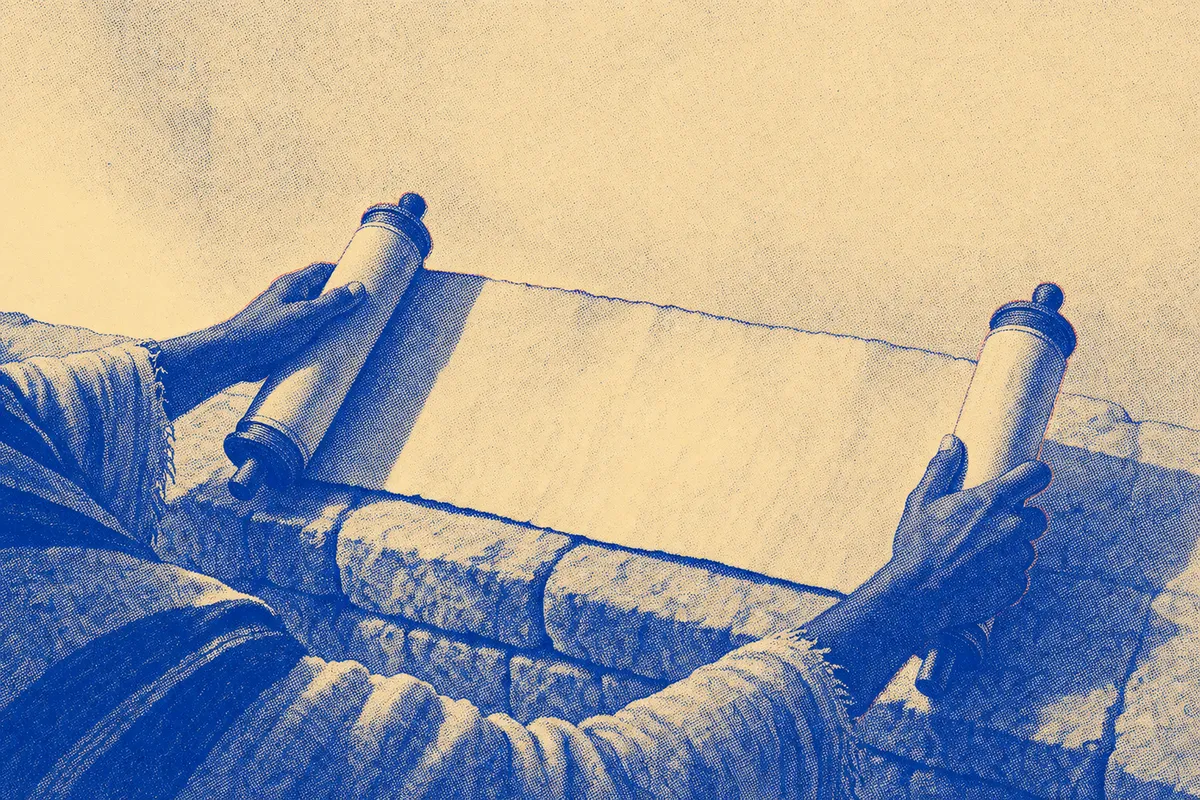
Most of us read the Bible forward, one verse after another, as if every sentence arrived fresh. But the writers often look back. Paul writes, "I wrote to you in my letter not to associate with sexually immoral people," and then clarifies what he meant. Jesus says, "You have heard that it was said," and then gives his own reading. These are small signposts, and they are worth stopping for.
The first thing a self-quotation tells you is that the speaker expected to be misunderstood. People rarely clarify what nobody got wrong. When Paul corrects a reading of his earlier letter, you learn that the earlier letter was in circulation, that someone took it further than he intended, and that he cared enough to say so. That is a small piece of history in a single clause.
The second thing it gives you is a test. Go to the earlier passage and read it whole. Often the reference is shorter or tighter than what is actually there. You may find that the speaker is emphasizing one thread and leaving others alone. Noticing which thread he picked up is a way of seeing what he thought mattered in that moment.
Take the temptation scenes in Matthew 4. Each time, Jesus answers with a line from Deuteronomy. If you read only Matthew, the lines feel like quick replies. If you open Deuteronomy 6 and 8, you find they come from speeches about the wilderness, about hunger, about testing God at Massah. He is not grabbing slogans. He is standing in a story and saying he knows where he is in it.
Do this with a pencil. Mark the later verse with a small arrow, and in the margin of the earlier passage write the reference back. Two pencil marks will link them for good. Within a few weeks you will have a handful of these pairs, and you will begin to catch them without trying.
You do not need a commentary for this. Your Bible's cross-references will point you to most of the cases, and the rest you will find by reading closely. The habit is simple: when someone in the text says he is repeating himself, believe him, and go and look.
- Find a place where a speaker refers back to something he said or wrote earlier.
- Turn to the earlier passage and read it in full, not just the line.
- Compare the two: what stayed, what was added, what was dropped.
- Write one sentence in the margin saying why he reached back.
15 MIN
Tools
A Sheet of Paper Folded in Four for Each Book
One sheet, folded small enough to live inside the cover, can hold everything you need to remember about a book.
The trouble with reading a book of the Bible over several weeks is that the beginning leaves your head before you reach the end. By chapter twelve of Exodus you have half forgotten what Moses was doing in chapter three. A good memory helps, but a folded sheet of paper helps more.
Take a plain sheet and fold it in half, then in half again, so it fits within the cover of your Bible. You now have four small panels on each side. Label the first Who, the second Where, the third What happens, and the fourth What I'm unsure of. Those four headings are enough. Anything more elaborate and you will stop using it.
Under Who, write the names as they appear, with a word or two beside each: Aaron, brother, speaks for Moses. Under Where, put the places in order. Under What happens, write a line for each major turn, not each chapter. A book like Exodus has maybe a dozen turns. Keep them short enough that you could say them aloud in a breath.
The last panel is the most useful and the most neglected. Write down what you do not understand, in the moment you do not understand it. Why does God harden Pharaoh's heart? What is the tent of meeting, exactly? Do not try to settle these. Some will answer themselves by the end of the book, and you will have the pleasure of crossing them off. Others will stay, and you will know precisely what to ask when you finally open a commentary.
Before each sitting, unfold the sheet and read it. It takes under a minute. It puts you back in the story where you left off, rather than making you spend ten minutes of your reading time getting your bearings.
When the book is finished, leave the sheet in place at the start of it. Years later you may open to that page and find your own handwriting, a record of what you saw and what you did not. That is a better bookmark than a ribbon, and a better memory than most of us have.
- Fold a sheet of plain paper in half twice and tuck it in your Bible.
- Label the four panels: Who, Where, What happens, What I'm unsure of.
- Fill in the first three after your first reading of the book, the fourth as you go.
Getting started
Read the Book of James Like a Sermon You're Allowed to Interrupt
James is short, blunt, and written to be argued with; it rewards a reader who talks back.
James is a good book to begin with if you have never read the Bible steadily. It is five chapters long, it is mostly direct instruction, and it has almost none of the historical background that makes other letters hard to enter. You can read it in a quarter of an hour and know roughly what it says.
It also sounds like speech. James moves quickly from one subject to the next, and he addresses his readers directly: "Come now, you who say." He asks questions he expects you to answer. He is closer to a preacher with an audience than to a writer at a desk, and the best way to read him is to imagine the room.
On your first reading, do not stop. Read straight through to the end and let the rhythm carry you. You will not follow everything, and that is fine. You are getting the shape of the thing: trials in the first chapter, faith and works in the second, the tongue in the third, and so on.
On the second pass, slow down and look at the commands. James gives a great many of them. Be quick to listen, slow to speak. Do not show favoritism. Do not speak evil against one another. For each, ask who he is addressing. Sometimes it is the rich, sometimes the poor, sometimes anyone who has been angry this week. Writing the audience beside the command keeps you from taking every line as aimed at you in the same way, and also keeps you from assuming it is aimed at someone else.
Then notice the pictures. James is fond of them: the wave driven by the wind, the horse's bit, the ship's rudder, the mist that vanishes. These are not decoration. Each one is an argument compressed into an image. Underline them and ask what the picture claims that a plain statement would not.
Lastly, write your question. Perhaps you wonder how his view of faith and works fits with Paul's, or what he means by wisdom. Do not look for the answer yet. A good question carried for a few days will teach you more than a quick reply, and James is a writer who would have wanted you to push back.
- Read James once through in a single sitting, about fifteen minutes.
- On the second pass, stop at each command and write down who it is aimed at.
- Mark every place James uses a picture: a wave, a bit, a rudder, a mist.
Back to today's paper →