There is a kind of dark that has nothing to do with the hour. It belongs to a decision that has gone on too long. You have weighed the job, the move, the offer, the diagnosis, the conversation you keep rehearsing. You have made the lists and asked the people you trust, and their answers do not agree with one another. Each morning you wake up half hoping the matter was settled overnight, and each morning it is exactly where you left it.
The hardest part is rarely the choice itself. It is the length of the waiting. A short dark can be endured. A long one starts to change how you think about yourself. You wonder whether you are missing something obvious, or whether you are simply a person who cannot decide. You begin to want light for the whole road, and you resent being handed so little of it.
With that in mind, read what Jesus says in John 8:12. The Berean Standard Bible renders it this way: "Once again, Jesus spoke to the people and said, “I am the light of the world. Whoever follows Me will never walk in the darkness, but will have the light of life.””
Start with the small phrase at the front, "Once again." Jesus is not offering this for the first time. He has said things like it before, and the people listening have heard him and walked away unsure. The sentence arrives into an ongoing conversation with people who had not yet made up their minds. Whatever else this verse is, it was spoken to the undecided, and it was spoken more than once because they needed to hear it more than once. That alone is some company for you.
Then look at what he claims. He does not say, "I will give you light," as though light were a thing he held in his hand and might pass over. He says, "I am the light of the world." The light is a person. That changes what you are looking for. You have been asking for a lamp bright enough to show the entire path, so that you could inspect it and choose with confidence. He offers himself, and a person can be followed in a way a floodlit map cannot.
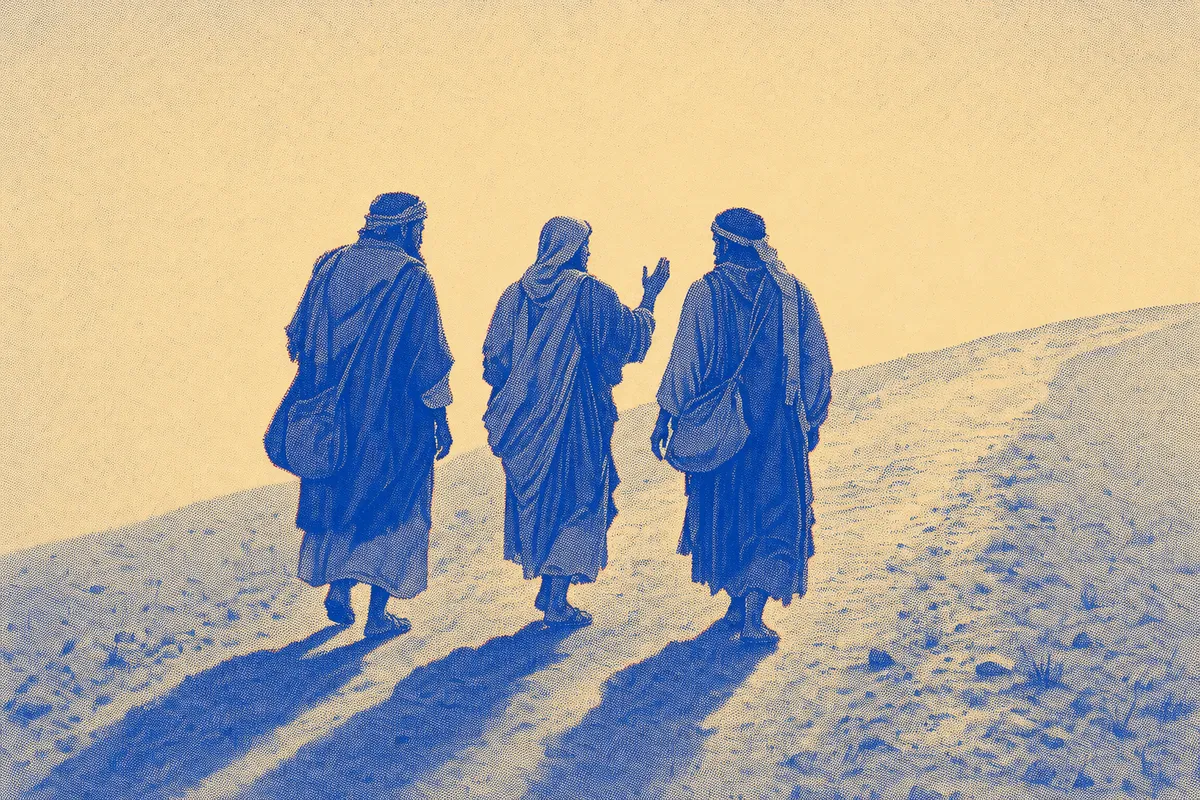
Notice the verb he attaches to the promise: "Whoever follows Me." Following is what you do when you cannot see far. If you could see the whole route, you would not need anyone to lead. A follower sees the next few feet and the back of the one ahead, and that is the whole of the arrangement. The promise is not that the darkness will be taken away before you move. It is that the one who follows "will never walk in the darkness." The promise is attached to walking.