Know this, my beloved brothers: let every person be quick to hear, slow to speak, slow to anger; for the anger of man does not produce the righteousness of God.
James 1:19-20 (ESV)
EU•AN•GE•LION (YOO-AN-GEL-EE-ON) · εὐαγγέλιον — Good News
EUANGELION is a product of WokeGod LLC. Copyright © 2026 WokeGod LLC. All rights reserved.v0.8.37TermsPrivacyCookie PolicyCommunity GuidelinesContent Disclaimer
EU•AN•GE•LION (YOO-AN-GEL-EE-ON) · εὐαγγέλιον — Good News

When provocation tests your roots, peace becomes your most powerful response
James 1:19-20
Opening
Know this, my beloved brothers: let every person be quick to hear, slow to speak, slow to anger; for the anger of man does not produce the righteousness of God.
James 1:19-20 (ESV)
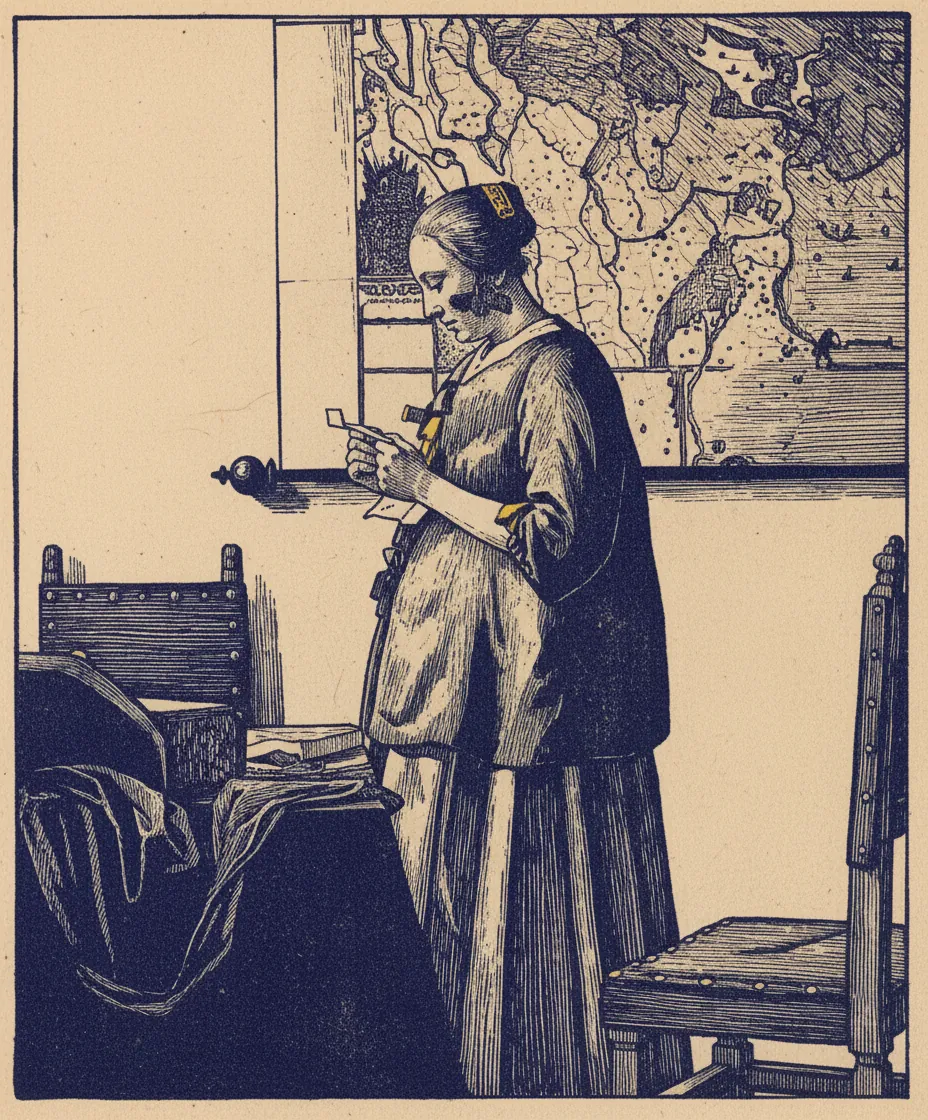
“Woman Reading a Letter” — Johannes Vermeer, c.1663
James does not prohibit anger. He repositions it. Anger that follows genuine listening becomes discernment. Anger that precedes listening becomes destruction.
James wrote to scattered Jewish Christians facing persecution and internal conflicts. His counsel was not theoretical. These people were being provoked daily, questioned by authorities, tested by fellow believers who disagreed with them. Into that pressure cooker, James offered a rhythm: quick to hear, slow to speak, slow to anger.
The order is deliberate and counter-instinctive. Under pressure, most people reverse it: quick to anger, quick to speak, slow to hear. James inverts the natural reaction because he understands that human anger, no matter how justified it feels, does not produce the righteousness of God.
This is not a call to passivity. James is not saying ‘never be angry.’ He is saying anger should arrive last in the sequence, after genuine listening and careful speech. Anger that follows understanding is discernment. Anger that precedes it is destruction.
James wrote to scattered Jewish Christians facing persecution and internal conflicts.

“Still Life with Copper Pot” — Jean-Baptiste-Siméon Chardin, c.1734
Responding from Root, Not Wound
As Chad Reynolds built OCEAN and spoke publicly about integrating faith into entrepreneurial culture, he challenged the gospel of hustle. Not everyone cheered. Critics saw his message as naive, his faith as a liability in business, and his pushback against ethical shortcuts as sanctimonious.
The provocation was real. People questioned his motives in meetings. Competitors dismissed his model. Online comments mocked the idea that faith had any place in a startup accelerator.
Chad had a choice that every person under pressure faces: respond from the wound or respond from the root. He chose presence over pride. Not silence, not retreat, but the deliberate discipline of listening before speaking and letting peace govern his reactions before anger did.
Chad’s experience of public criticism mirrors the situation James addresses: pressure from outside that tempts a reactive, anger-first response. His choice to lead with presence instead of pride embodies the James 1:19 rhythm.
The Strength of Softness
Solomon wrote, ‘A soft answer turns away wrath, but a harsh word stirs up anger’ (Proverbs 15:1). The Hebrew for ‘soft’ is rakh, which means tender, gentle, yielding. The word does not imply weakness. A soft answer requires more strength than a sharp one because it refuses to let the other person’s emotion dictate your response. Paul expanded this in Romans 12:17-18: ‘Repay no one evil for evil… If possible, so far as it depends on you, live peaceably with all.’ The qualifier ‘if possible’ and ‘so far as it depends on you’ is honest. Paul did not pretend peace is always achievable. But he placed the responsibility squarely on the believer: do your part. Your peace is not contingent on their behavior.
HISTORICAL CONTEXT
James, traditionally identified as the brother of Jesus, led the Jerusalem church during a period of intense conflict between Jewish and Gentile Christians. His letter addresses practical wisdom for living faithfully under social, economic, and religious pressure. His counsel on anger came from lived experience of navigating disagreement within the early church.
The phrase ‘slow to anger’ (bradys eis orgen) uses the same Greek root as our word ‘bradycardia,’ a slow heartbeat. James is prescribing a spiritual equivalent: when provocation raises your heart rate, deliberately slow it down. Let your spiritual pulse govern your reaction, not your adrenaline.
BRIDGE TO CHRIST
ANCIENT TRUTH
James told persecuted Christians to invert their instincts: listen first, speak second, let anger arrive last. Solomon taught that a soft answer holds more power than a harsh one.
Chad Reynolds faced professional criticism for integrating faith into business. James faced ecclesial conflict in the early church. The contexts differ; the principle holds: rooted people respond with discernment, not reaction.
MODERN APPLICATION
Every difficult email, every provocative comment, every personal attack presents the same choice: react from the wound or respond from the root. The pause between provocation and response is where your character lives.
NEW TESTAMENT ECHO
Jesus, when questioned by hostile Pharisees, often responded with a question rather than a defense (Mark 11:29-30). He modeled the very rhythm James would later teach: listen deeply, speak carefully, refuse to let provocation control the conversation.

“Sym Wheat Stalk Mustard Linocut” — Christopher James Parker + AI, to God be the Glory, 2026
REFLECT
When others provoke or test you, what anchors your response?
PRAYER
Posture: petition
God, before words come, let Your peace speak through me. I confess that I am quicker to react than to listen, quicker to defend than to understand. Teach me the rhythm James prescribed: swift hearing, slow speech, slow anger. Help me respond from my roots, not my wounds. When I am provoked today, remind me that my peace is not contingent on their behavior. Amen.
IN YOUR OWN WORDS
TAKEAWAY
Today I will practice one deep-breath prayer before responding to any tension. I will write one soft response to a difficult conversation instead of my first reactive impulse. I will pray blessing for someone who has opposed or questioned me.
LEAVING AT THE CROSS
RECEIVING FROM THE CROSS

“Sym Stones Cairn Linocut” — Christopher James Parker + AI, to God be the Glory, 2026
CHECK YOUR UNDERSTANDING
FOR REFLECTION
FOR ACCOUNTABILITY PARTNERS
FURTHER READING
RELATED SCRIPTURES
Proverbs 15:1
A soft answer turns away wrath, but a harsh word stirs up anger.
Romans 12:17-18
Repay no one evil for evil… If possible, so far as it depends on you, live peaceably with all.
Mark 11:29-30
Jesus answered them with a question rather than a defense when challenged by the chief priests.
FOR DEEPER STUDY
Read the full chapter for James’s teaching on trials, temptation, and the wisdom that comes from God
Presence Over Pride
As Chad publicly challenged hustle culture and integrated faith into his business accelerator, he faced criticism from competitors and skeptics. Rather than retaliating, he practiced the discipline of listening before responding and letting peace govern his reactions.
He chose presence over pride. Not silence, not retreat, but the deliberate discipline of listening before speaking.
LESSON FOR US
The pause between provocation and response is where your character lives. Rooted people respond with discernment, not reaction.
Finished reading? Mark this day read.
BEFORE YOU GO
Anything you want to keep from today?
EUANGELION is a product of WokeGod LLC. Copyright © 2026 WokeGod LLC. All rights reserved.v0.8.37TermsPrivacyCookie PolicyCommunity GuidelinesContent Disclaimer