By this everyone will know that you are my disciples, if you love one another.
John 13:35 (NIV)
EU•AN•GE•LION (YOO-AN-GEL-EE-ON) · εὐαγγέλιον — Good News
EUANGELION is a product of WokeGod LLC. Copyright © 2026 WokeGod LLC. All rights reserved.v0.8.37TermsPrivacyCookie PolicyCommunity GuidelinesContent Disclaimer
EU•AN•GE•LION (YOO-AN-GEL-EE-ON) · εὐαγγέλιον — Good News
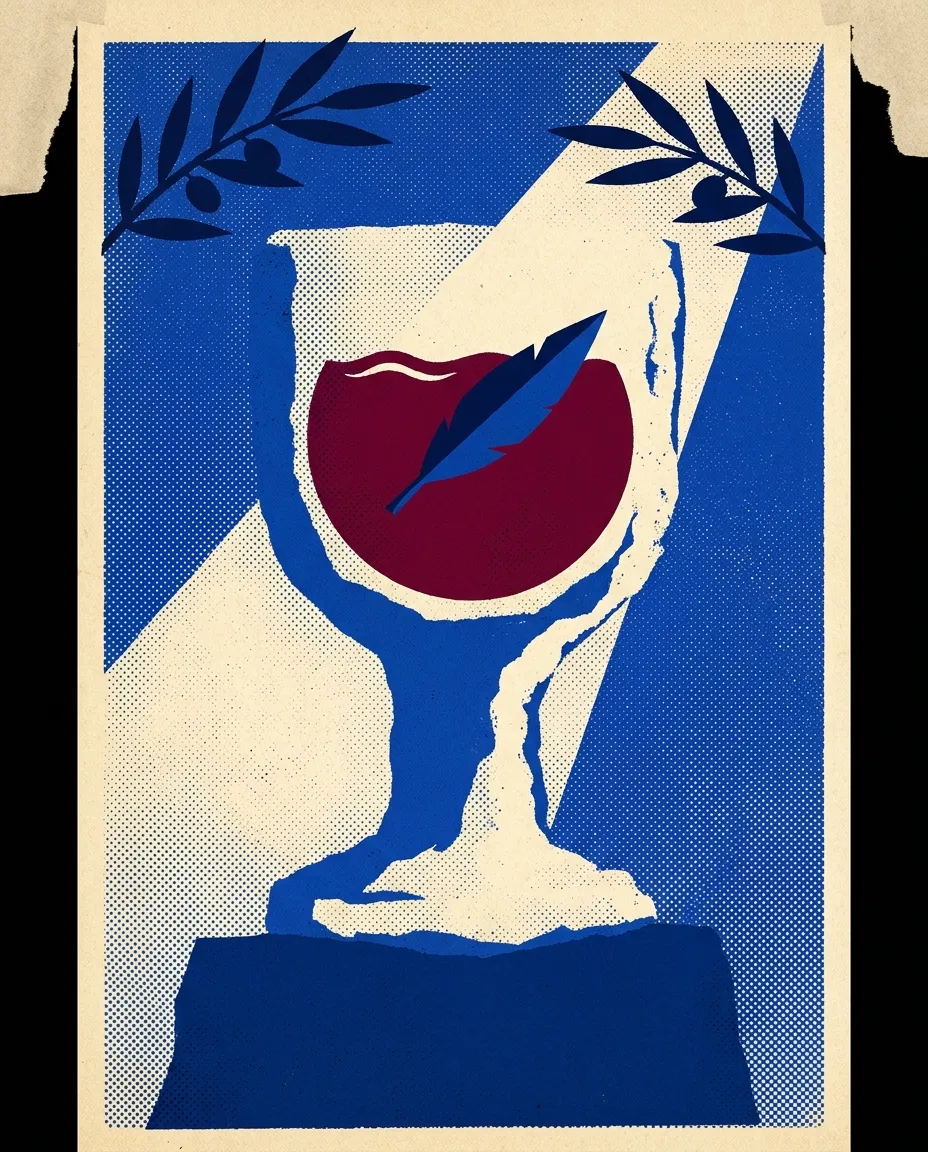
Our surrendered life together is the most compelling evidence that our God is real and His love transforms everything
John 13:35
Opening
By this everyone will know that you are my disciples, if you love one another.
John 13:35 (NIV)
“Sym Wheat Single Stalk Linocut” — Christopher James Parker + AI, to God be the Glory, 2026
The world is watching. They are looking for something real, something authentic, something that has the power to change lives. The surrendered life, lived out in a community of love, is that something.
We have spent this week exploring the heart of surrender. We’ve seen that it is an act of loving obedience, a paradox of freedom, a communal experience, and the only path to true life. Now, the question is: what will we do with this truth?
Start every day with a conscious act of surrender—the Daily Gethsemane. Before you check your phone, before you look at your to-do list, find a quiet place and pray the prayer of Jesus: ‘Not my will, but yours be done.’
Begin to see God’s commands not as a list of rules, but as a relational roadmap. When you read the Bible, ask not just ‘What does this say?’ but ‘How is this an invitation to love God and love others?’
Actively look for opportunities to put others first. Make it a daily practice to perform small acts of selfless service. Get deeply involved in a local church. And finally, count the cost and embrace it. A surrendered life is not an easy life, but the cost of non-surrender is infinitely higher.
The Early Christians and the Plague
In the second century, a plague swept through the Roman Empire, killing up to a third of the population in some areas. The pagan response was driven by fear and self-preservation. People abandoned their sick family members, leaving them to die in the streets. Doctors refused to treat the afflicted. The social fabric of the empire began to unravel.
But the Christians responded differently. In a letter, Dionysius, a bishop from that time, described how the Christians, ‘heedless of danger, took charge of the sick, attending to their every need and ministering to them in Christ.’ They brought food and water to those who had been abandoned. They held the dying in their arms. Many of these Christian caregivers contracted the plague themselves and died, having made the ultimate sacrifice of love.
This extraordinary, self-sacrificial love had a profound effect on the pagan world. Sociologist Rodney Stark, in his book The Rise of Christianity, argues that the Christian response to this and other plagues was one of the primary drivers of the church’s explosive growth. The pagans saw a community that cared for the weak, that did not fear death, and that loved one another with a supernatural love.
Our love for one another is the ultimate apologetic. In a world that is starving for authentic community, the loving, surrendered life of the church is the most attractive and compelling evidence for the truth of the gospel.
The Great Commission and the Great Commandment
Jesus’ final words to his disciples were the Great Commission: ‘Go and make disciples of all nations…’ (Matthew 28:19). But this commission is impossible to fulfill without the Great Commandment: ‘Love one another.’ Our love is the fuel and the foundation for our mission. The world will not listen to our message if they do not see it lived out in our relationships. The surrendered, loving community is the engine of the Great Commission.
HISTORICAL CONTEXT
The Christian response to the plagues of the second and third centuries was so counter-cultural that it became one of the primary drivers of the church’s explosive growth in the Roman Empire.
Emperor Julian (called ‘the Apostate’ for trying to restore paganism) complained that Christians ‘support not only their own poor but ours as well.’ The love of the church was so powerful it frustrated the enemies of the faith.
BRIDGE TO CHRIST
ANCIENT TRUTH
Jesus said the world would know we are His disciples by our love for one another—a love that the early church demonstrated through self-sacrificial service.
The same Spirit that empowered early Christians to care for plague victims empowers us to love sacrificially in our own context.
MODERN APPLICATION
In a world torn apart by division, selfishness, and fear, the church is called to be a visible demonstration of a different way—a community marked by supernatural love.
NEW TESTAMENT ECHO
1 John 3:16 – ‘This is how we know what love is: Jesus Christ laid down his life for us. And we ought to lay down our lives for our brothers and sisters.’
REFLECT
If someone were to observe your life for a week, would your love for other Christians be the most compelling evidence that you are a follower of Jesus?

“Element Divider Ornament Cream” — Christopher James Parker + AI, to God be the Glory, 2026
PRAYER
Posture: petition
Lord, let my life be a compelling witness to your love. May the way I love my brothers and sisters in Christ be so radically different from the world that people are forced to ask, ‘What is the source of that love?’ Make me a living, breathing advertisement for the gospel.
IN YOUR OWN WORDS
TAKEAWAY
I will begin each day with a conscious act of surrender, praying ‘Not my will, but yours be done,’ and I will look for one opportunity each day to demonstrate God’s love through sacrificial service.
LEAVING AT THE CROSS
RECEIVING FROM THE CROSS
CHECK YOUR UNDERSTANDING
FOR REFLECTION
FOR ACCOUNTABILITY PARTNERS
FURTHER READING
RELATED SCRIPTURES
1 John 3:16-18
This is how we know what love is: Jesus Christ laid down his life for us. And we ought to lay down our lives for our brothers and sisters.
Galatians 2:20
I have been crucified with Christ and I no longer live, but Christ lives in me.
FOR DEEPER STUDY
A classic exploration of what it means to follow Christ
How the early church’s love-driven response to plagues fueled explosive growth
Those Who Loved Unto Death
During the plagues of the second and third centuries, Christians risked their lives to care for the sick and dying—including pagans who had been abandoned by their own families. Their sacrificial love became the most powerful witness to the gospel.
See how these Christians love one another!
LESSON FOR US
Our love for one another, especially in times of crisis, is the most compelling evidence that our faith is real and our God is alive.
Finished reading? Mark this day read.
BEFORE YOU GO
Anything you want to keep from today?
EUANGELION is a product of WokeGod LLC. Copyright © 2026 WokeGod LLC. All rights reserved.v0.8.37TermsPrivacyCookie PolicyCommunity GuidelinesContent Disclaimer