It is for freedom that Christ has set us free. Stand firm, then, and do not let yourselves be burdened again by a yoke of slavery.
Galatians 5:1 (NIV)
EU•AN•GE•LION (YOO-AN-GEL-EE-ON) · εὐαγγέλιον — Good News
EUANGELION is a product of WokeGod LLC. Copyright © 2026 WokeGod LLC. All rights reserved.v0.8.37TermsPrivacyCookie PolicyCommunity GuidelinesContent Disclaimer
EU•AN•GE•LION (YOO-AN-GEL-EE-ON) · εὐαγγέλιον — Good News
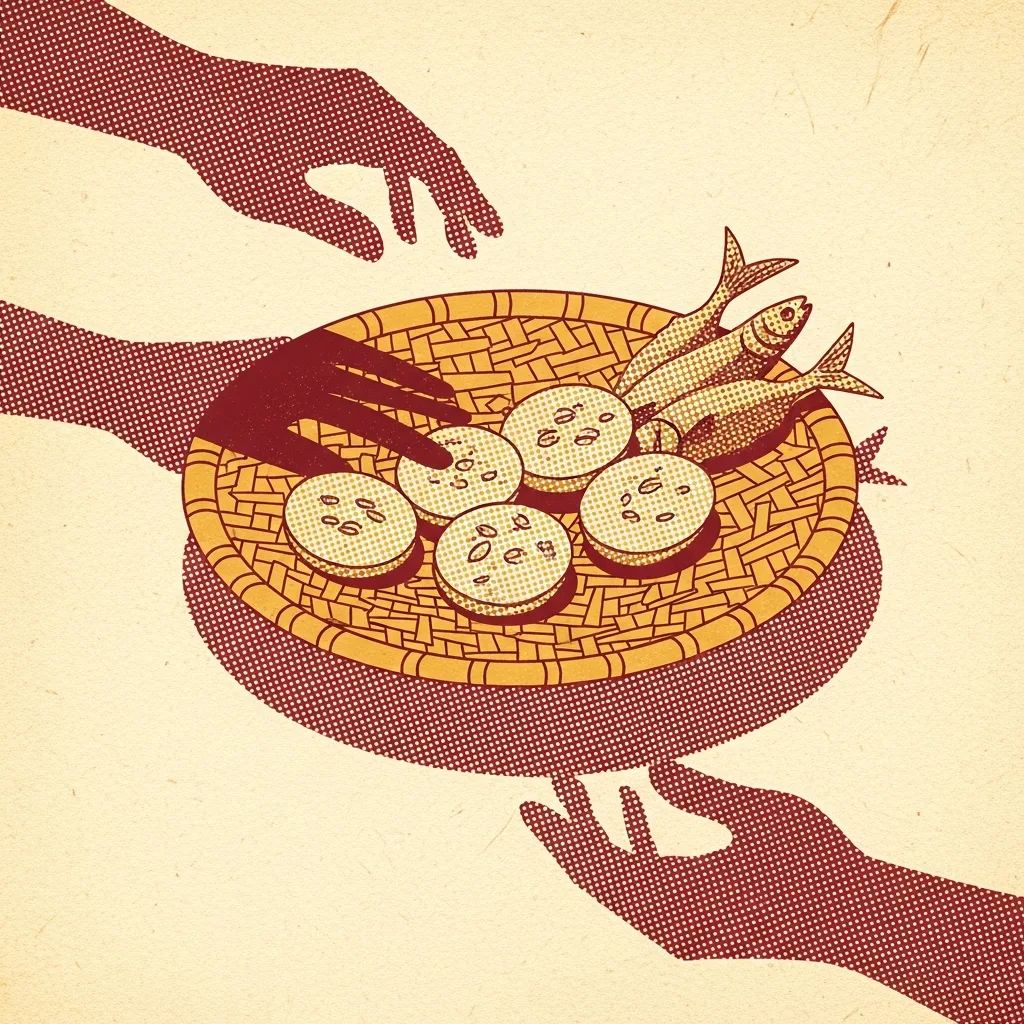
What if recovery and faith have more in common than either side wants to admit?
Galatians 5:1-6
Opening
It is for freedom that Christ has set us free. Stand firm, then, and do not let yourselves be burdened again by a yoke of slavery.
Galatians 5:1 (NIV)
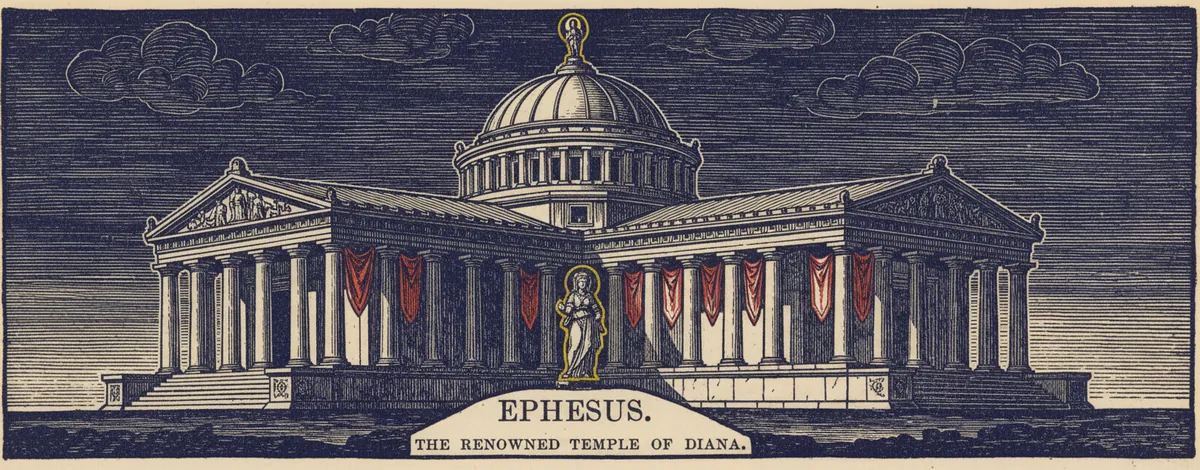
“Ancient Roman road, Galatia — Turkey” — Unknown (Roman), Roman period
Freedom comes first. Love is what freedom produces. You do not love in order to become free. You are freed, and love is the natural overflow of someone who has stopped performing.
Paul has spent four chapters dismantling the performance system. Now he names what replaces it — and it is not what most people expect.
The word is freedom. Not moral improvement. Not theological correctness. Not emotional stability. Freedom.
This creates an immediate problem. If God’s acceptance does not depend on your behavior, what prevents moral chaos? If the performance system is dismantled, what keeps people in line? Paul’s opponents in Galatia asked exactly this question, and it has been asked in every century since. It is the question that makes religious institutions nervous about grace: if you tell people they are free, they might actually act like it.
Paul does not flinch. His answer is not ‘freedom with conditions’ or ‘freedom within boundaries.’ His answer is freedom — full, unqualified, dangerous-sounding freedom. And then, without contradicting himself, he describes what that freedom produces: ‘faith expressing itself through love.’
This is the logic that separates Christianity from every other moral system. In every performance system — religious or secular — love is the requirement. You must love God. You must love your neighbor. You must be compassionate, patient, kind. The obligation comes first; the behavior is supposed to follow.
Paul reverses the sequence. Freedom comes first. Love is what freedom produces. You do not love in order to become free. You are freed, and love is the natural overflow of someone who has stopped performing.
This is why recovery programs and the gospel share structural DNA. In recovery, the first step is admitting powerlessness — the death of the performance illusion. What follows is not willpower but surrender to a power outside yourself. The behavioral changes are fruit, not root. Nobody gets sober by trying harder. They get sober by giving up on trying and accepting help.
Paul would recognize every twelve-step meeting in the world. The structure is Galatians in secular clothing: you cannot fix yourself. Stop trying. Receive what is offered. And then — only then — watch what freedom produces.
His answer is not ‘freedom with conditions’ or ‘freedom within boundaries.’ His answer is freedom — full, unqualified, dangerous-sounding freedom.
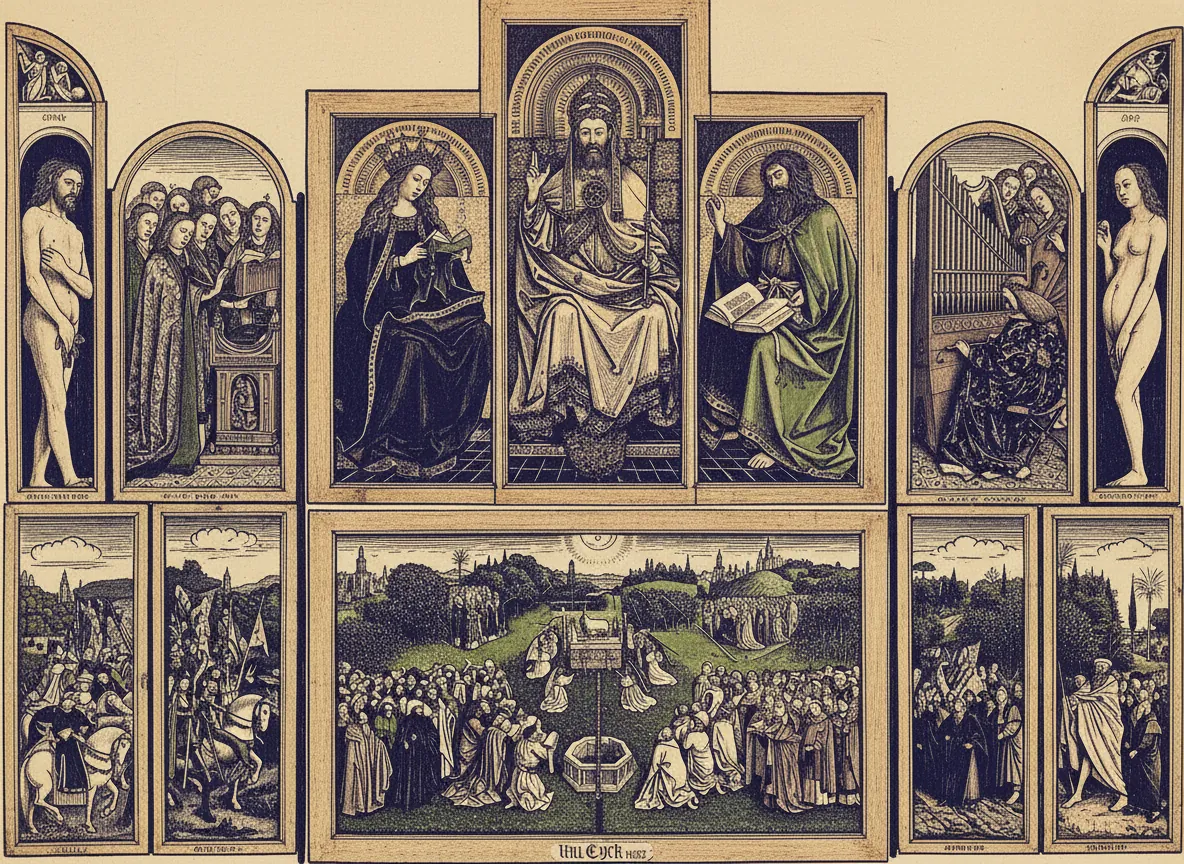
“Ghent Altarpiece — Adoration of the Mystic Lamb” — Jan and Hubert van Eyck, 1432
The Long Road That Isn't a Straight Line
Dennis Quaid got clean in the early 1990s. The story could end there — addiction conquered, lesson learned, faith restored — and it would make a tidy testimony. But tidy testimonies are usually lies by omission.
Quaid’s recovery was not a single event. It was a process — halting, nonlinear, marked by setbacks he has been candid about. Sobriety did not resolve his marriages. It did not fix his career trajectory. It did not deliver the emotional stability that recovery testimonials often promise. What it delivered was something less dramatic and more durable: the capacity to face reality without anesthesia.
The return to faith was even less linear. Quaid did not walk out of rehab into a church. He has described a slow gravitational pull back toward something he could not name precisely — not the inherited Baptist faith of his childhood, which had been exposed as secondhand, but something beneath it. A sense that the hole cocaine had temporarily filled was not cocaine-shaped. It was shaped like a question that had been there before the drugs, before Hollywood, before the performance machinery started running.
He has attended different churches. He has questioned doctrines. He has not presented himself as a model of spiritual certainty. In interviews, he speaks about faith the way recovering addicts speak about sobriety: one day at a time, with the humility of someone who knows the machine can restart.
This is what makes Quaid’s story useful rather than merely inspirational. It does not fit the before-and-after template. It fits the Galatians template: freedom is real, but freedom does not mean fixed. It means liberated from the performance system — including the performance of having a perfect recovery.
Quaid’s messy, nonlinear recovery is a more honest picture of Galatians 5 freedom than any clean conversion story. Paul’s freedom is not the absence of struggle — it is the refusal to let struggle push you back into the performance cage.
Paul’s phrase ‘yoke of slavery’ would have carried devastating political overtones for his audience. Galatia was a Roman province — its inhabitants knew literal slavery. For Paul to compare Torah observance to slavery was not a polite theological metaphor. It was an incendiary claim that religious performance and political oppression share structural mechanics: both promise belonging through compliance, both punish deviation, and both depend on the subject never realizing they have the option to walk away.
HISTORICAL CONTEXT
The ‘yoke of the Torah’ was a respected phrase in rabbinic Judaism — Rabbi Nehuniah ben HaKanah (first century) spoke of ‘accepting the yoke of Torah’ as a mark of devotion. Paul is not dismissing Torah itself but its function as a performance system. His argument is with the yoke, not the content.
The twelve-step recovery model, developed by Bill Wilson and Dr. Bob Smith in 1935, mirrors Pauline theology with striking precision: powerlessness (Romans 7), surrender to a higher power (Galatians 2:20), moral inventory (Romans 3:23), amends (Matthew 5:23-24), and ongoing dependence (Galatians 5:16). Wilson, an agnostic, was influenced by the Oxford Group, which drew heavily on Pauline epistles.
BRIDGE TO CHRIST
ANCIENT TRUTH
Paul declares that Christ’s freedom is the purpose of salvation — not a byproduct. Freedom comes first; love, service, and moral transformation are what freedom produces, not what earns it.
Quaid’s nonlinear recovery mirrors the Galatian experience: freedom was received, then tested, then threatened by the pull back toward performance. Paul’s ‘stand firm’ is the same counsel any sponsor gives: do not go back to what almost killed you.
MODERN APPLICATION
Recovery culture and gospel culture share identical logic: you cannot fix yourself into wholeness. The behavioral changes come after surrender, not before. Every attempt to reverse this sequence — perform first, receive acceptance second — rebuilds the cage.
NEW TESTAMENT ECHO
John 8:36 — ‘So if the Son sets you free, you will be free indeed.’ The Greek word for ‘indeed’ is ontos — ‘really, actually, in reality.’ Jesus distinguishes real freedom from its counterfeits.

“Brand Paper Torn Edge” — Christopher James Parker + AI, to God be the Glory, 2026
REFLECT
What does freedom look like in your life right now — not as an ideal, but as an honest description of where you actually are?
PRAYER
Posture: standing, arms at your sides — the posture of someone who has stopped carrying what was never theirs to carry
God, I do not want to perform my way back into a cage. I have seen enough of what the cage produces — in my life, in Quaid’s story, in the Galatians’ confusion. I want the freedom Paul fought for. Not freedom from all struggle, but freedom from the lie that my struggle disqualifies me. Teach me to stand firm — not in my own strength, but in the verdict you have already rendered. I am tired of rebuilding what grace demolished. Let me rest in what is already true. Amen.
IN YOUR OWN WORDS
TAKEAWAY
Today, I will identify one area where I have been trying to ‘fix’ myself into acceptability — and I will practice receiving instead of performing.
LEAVING AT THE CROSS
RECEIVING FROM THE CROSS
“Sym Chalice Cup Linocut” — Christopher James Parker + AI, to God be the Glory, 2026
CHECK YOUR UNDERSTANDING
FOR REFLECTION
FOR ACCOUNTABILITY PARTNERS
FURTHER READING
RELATED SCRIPTURES
John 8:31-36
To the Jews who had believed him, Jesus said, ‘If you hold to my teaching, you are really my disciples. Then you will know the truth, and the truth will set you free.’
Romans 8:1-2
Therefore, there is now no condemnation for those who are in Christ Jesus, because through Christ Jesus the law of the Spirit who gives life has set you free from the law of sin and death.
2 Corinthians 3:17
Now the Lord is the Spirit, and where the Spirit of the Lord is, there is freedom.
FOR DEEPER STUDY
Gerald May’s ‘Addiction and Grace’ explores the structural parallels between chemical dependency and spiritual bondage — arguing that all human beings are addicted to something, and that grace operates identically in both domains.
The Actor Who Learned That Free Does Not Mean Fixed
In recovery, Quaid discovered what Paul described two millennia earlier: freedom is not a destination but a posture. His willingness to speak about ongoing imperfection — rather than performing the role of a reformed man — makes his story more useful than a tidy conversion narrative. He models what Galatians 5 actually looks like: standing firm in freedom while acknowledging the gravity that pulls you back toward the cage.
I go to church regularly. I find that when I don’t, I start to go sideways.
LESSON FOR US
Quaid’s honesty about needing ongoing support — not as weakness but as freedom’s maintenance — mirrors Paul’s ‘stand firm.’ Freedom is not a single moment of liberation. It is a daily refusal to rebuild the cage.
Finished reading? Mark this day read.
BEFORE YOU GO
Anything you want to keep from today?
EUANGELION is a product of WokeGod LLC. Copyright © 2026 WokeGod LLC. All rights reserved.v0.8.37TermsPrivacyCookie PolicyCommunity GuidelinesContent Disclaimer