But the fruit of the Spirit is love, joy, peace, forbearance, kindness, goodness, faithfulness, gentleness and self-control. Against such things there is no law.
Galatians 5:22-23 (NIV)
EU•AN•GE•LION (YOO-AN-GEL-EE-ON) · εὐαγγέλιον — Good News
EUANGELION is a product of WokeGod LLC. Copyright © 2026 WokeGod LLC. All rights reserved.v0.8.37TermsPrivacyCookie PolicyCommunity GuidelinesContent Disclaimer
EU•AN•GE•LION (YOO-AN-GEL-EE-ON) · εὐαγγέλιον — Good News
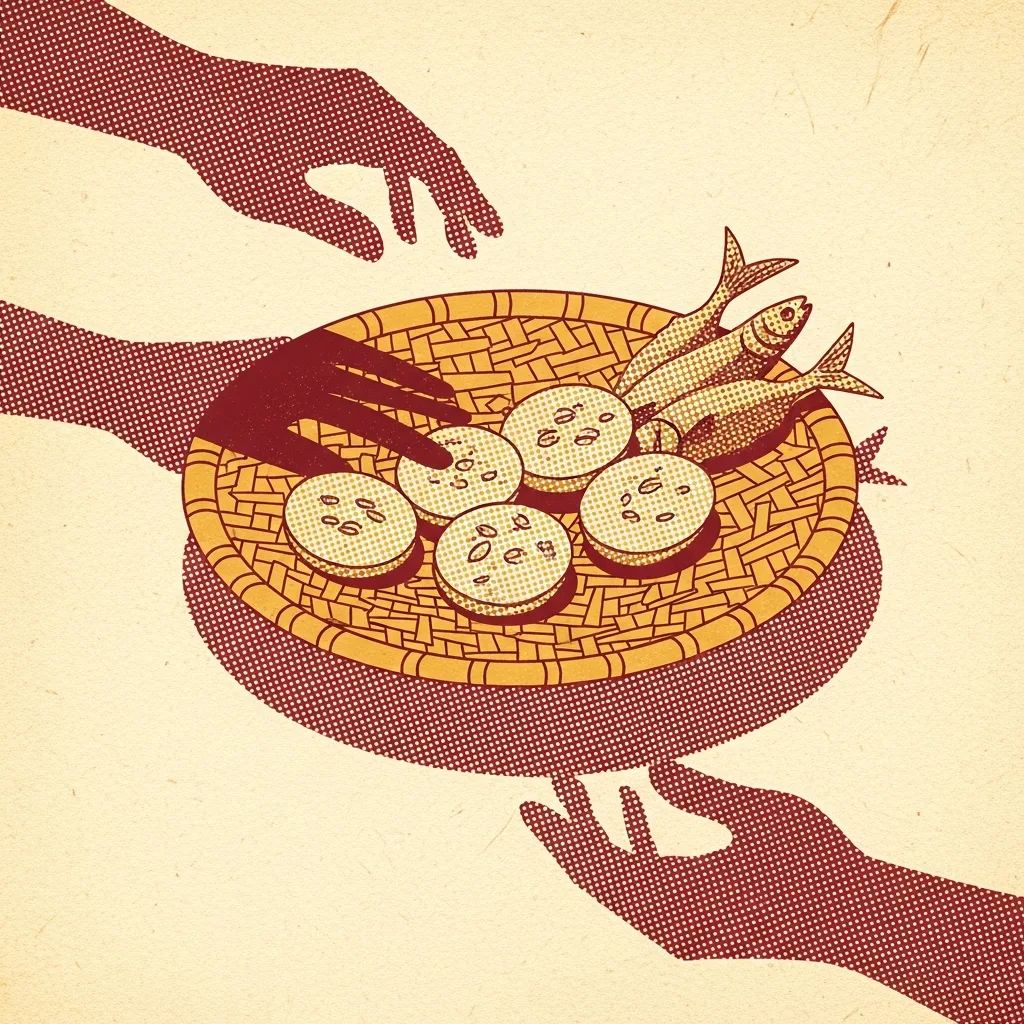
Not a cleaned-up life. Not a perfect belief system. Something stranger and more durable than either.
Galatians 5:22-26
Opening
But the fruit of the Spirit is love, joy, peace, forbearance, kindness, goodness, faithfulness, gentleness and self-control. Against such things there is no law.
Galatians 5:22-23 (NIV)

“The Apostle Paul” — Rembrandt van Rijn, c.1657
The nine qualities are not goals to achieve — they are diagnostic evidence. They tell you what kind of tree you are connected to. You do not need to try to be good. You need to be connected to the source of goodness.
Every religion has a list. Buddhism has the Eightfold Path. Islam has the Five Pillars. Stoicism has the four cardinal virtues. When Paul lists nine qualities in Galatians 5:22-23, it looks like Christianity’s entry in the catalog: here are the behaviors you should produce.
But the grammar betrays the assumption. Paul does not write ‘the requirements of the Spirit’ or ‘the commands of the Spirit’ or ‘the goals of the Spirit.’ He writes ‘the fruit of the Spirit.’ And fruit is not produced by the branch. It is produced through the branch.
This distinction is the difference between religion and what Paul is describing. In a religious framework, you see the list — love, joy, peace, patience, kindness — and you try harder. You white-knuckle your way toward patience. You manufacture kindness through willpower. You perform joy even when you feel nothing.
Paul says this is exactly backward. The nine qualities are not goals to achieve. They are diagnostic evidence. They tell you what kind of tree you are connected to. If you see love growing in your life — not performed love, not obligated love, but the kind that surprises even you — that is evidence that something is alive inside you that was not alive before.
This is why Paul adds the strange sentence: ‘Against such things there is no law.’ It sounds unnecessary. Of course there is no law against love and kindness. But Paul is making a deeper point. The law — every performance system — operates by prohibition and requirement. It tells you what to avoid and what to produce. Fruit operates outside that entire category. You cannot legislate an apple tree into bearing oranges. You cannot legislate a life connected to the Spirit into performing the flesh’s works.
The implication is disorienting for anyone raised in a performance system, religious or secular: you do not need to try to be good. You need to be connected to the source of goodness. The behavioral transformation is real, but it is a symptom, not a cause.
This is not permission to be passive. Paul’s word for the Spirit-connected life is stoicheo — ‘keep in step with.’ It is a military marching term. There is rhythm, discipline, attentiveness. But the discipline is in the walking, not in the producing. You stay connected. The fruit takes care of itself.
When Paul lists nine qualities in Galatians 5:22-23, it looks like Christianity’s entry in the catalog: here are the behaviors you should produce.
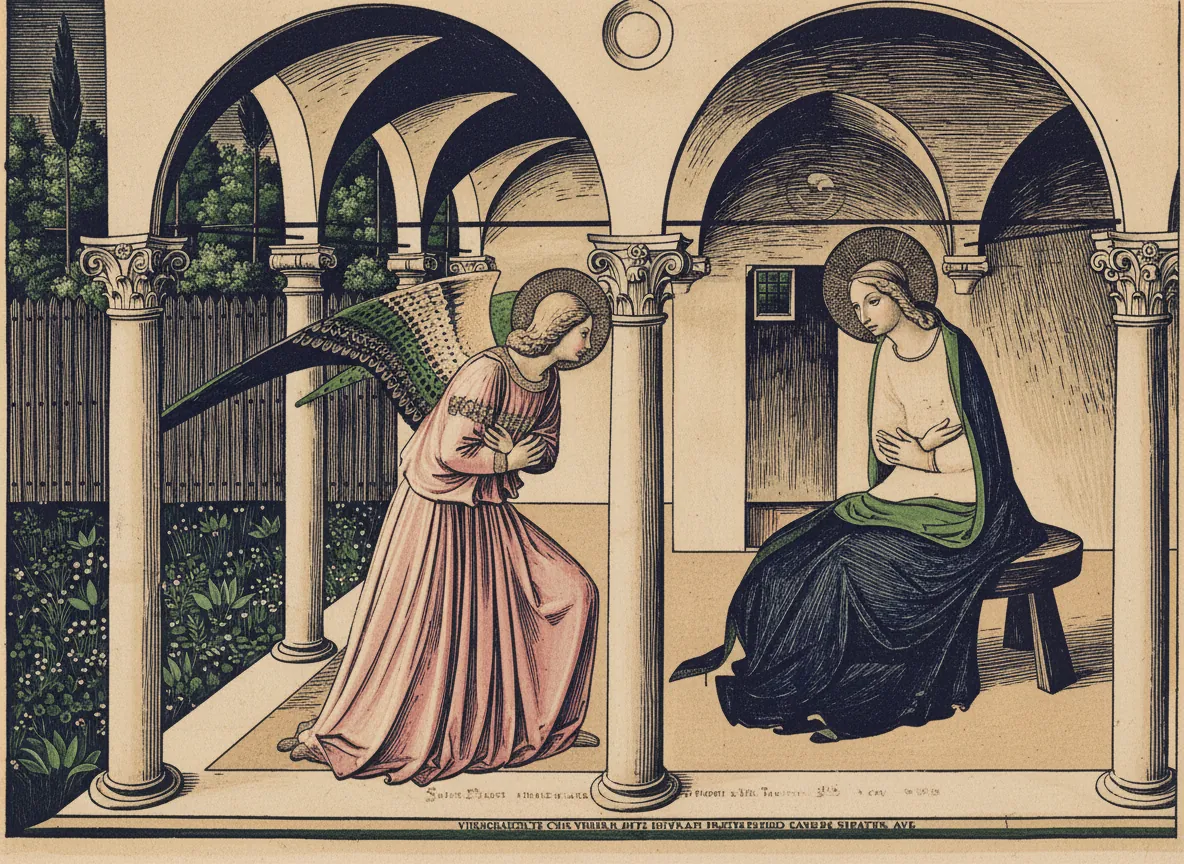
“The Annunciation” — Fra Angelico, 1438–45
A Faith Without a Highlight Reel
Dennis Quaid does not have a dramatic conversion moment. He has acknowledged this directly, and the honesty is more useful than a tidy story would be.
What he describes instead is a slow return — a gravitational pull back toward faith that operated beneath the surface of his recovery. It was not churchgoing that brought him back, though he eventually returned to church. It was not a theological argument, though he has spoken about finding intellectual depth in Christianity that surprised him. It was closer to recognition: the sense that the questions cocaine had temporarily silenced were still there, and that they had a shape he could now identify.
In recent years, Quaid has spoken about his faith without the polish of a professional testimony. He reads the Bible. He prays — not always fluently. He attends church and admits that when he stops, he drifts. He does not present himself as having arrived. He presents himself as walking.
This is what the fruit of the Spirit actually looks like in a real life. Not the nine qualities displayed simultaneously in Instagram-worthy fashion. Not a person who has conquered all their demons. But someone in whom you can see — slowly, unevenly, genuinely — love where there was self-absorption. Peace where there was restlessness. Self-control where there was compulsion. Not perfection. Growth.
Quaid’s faith is not impressive by religious standards. It is impressive by honest standards. He is not performing Christianity. He is living in what Paul called the freedom of the Spirit — imperfectly, daily, one step at a time.
When asked about his faith in a 2019 interview, Quaid said something that Paul might have written if Paul had grown up in Houston: ‘I just try to keep it simple. I read the Bible. I talk to God. I try not to be a jerk.’ It is not eloquent theology. But it sounds remarkably like ‘faith expressing itself through love.’
Quaid embodies what real fruit looks like: not a performance of the nine qualities but the slow, uneven evidence of a life connected to something beyond the self. His simplicity — ‘I try not to be a jerk’ — is more theologically accurate than most sermons on the fruit of the Spirit.
Paul’s phrase ‘against such things there is no law’ is more radical than it appears. In ancient jurisprudence, every legal system operated by defining boundaries — what is permitted, what is prohibited. Paul is saying the fruit of the Spirit exists in a category that legal systems cannot touch. Love cannot be commanded into existence. Joy cannot be legislated. Peace cannot be enforced. These qualities emerge from a source that is fundamentally outside the jurisdiction of performance systems. The law can prohibit murder but it cannot produce love. It can enforce behavior but it cannot generate character. Paul is not dismissing the law’s value. He is naming its ceiling.
HISTORICAL CONTEXT
The nine qualities Paul lists would have been recognizable to both Jewish and Greco-Roman audiences but arranged in a way neither tradition expected. Love (agape) leads — not wisdom, not justice, not piety. Self-control (enkrateia) closes — a Stoic virtue repurposed as Spirit-given rather than self-generated. Paul builds a bridge between worlds while subverting both.
The singular ‘fruit’ (karpos) versus plural ‘works’ (erga) in Galatians 5 creates a theological architecture: sin fragments, grace unifies. The flesh produces a scattered list of disconnected behaviors. The Spirit produces a single, integrated character. Medieval theologians noticed this and called the fruit of the Spirit ‘the one gift with nine faces.’
BRIDGE TO CHRIST
ANCIENT TRUTH
Paul concludes his argument not with a new command but with a description: this is what a life looks like when it is connected to the Spirit rather than running on the flesh’s fuel. The fruit is evidence, not assignment.
Quaid’s ‘I try not to be a jerk’ is the colloquial version of ‘faith expressing itself through love.’ Both describe a life that is no longer performing goodness but is slowly — imperfectly, honestly — producing it.
MODERN APPLICATION
In a culture obsessed with self-improvement — productivity apps, optimization hacks, growth mindsets — Paul offers a disorienting alternative: stop trying to produce. Stay connected. The transformation you cannot manufacture through effort will emerge organically through relationship.
NEW TESTAMENT ECHO
John 15:4-5 — ‘Remain in me, as I also remain in you. No branch can bear fruit by itself; it must remain in the vine. Neither can you bear fruit unless you remain in me. I am the vine; you are the branches.’
“Sym Fish Terracotta Linocut” — Christopher James Parker + AI, to God be the Glory, 2026
REFLECT
Over these five days, what version of Christianity have you been carrying — the performance system or the euangelion? Which one feels more true to what you have read?
PRAYER
Posture: kneeling or sitting still — the posture of someone who has stopped running
God, I have spent five days with Paul and with a story that does not fit the religious highlight reel. I am grateful for that. I do not want a highlight reel faith. I want what Paul described — a life that produces fruit I did not manufacture, love I did not perform, peace I did not earn. I do not fully understand how this works. But I have seen enough to know that the performance system does not work. So I am here. Connected. Willing. Waiting to see what grows. If Christianity is news — if it is euangelion — then I am ready to hear it. Not as advice to follow, but as reality to receive. Amen.
IN YOUR OWN WORDS
TAKEAWAY
This week, I will practice ‘keeping in step with the Spirit’ — not by adding spiritual tasks to my to-do list, but by paying attention to where love, peace, or patience appear in my life without my effort, and acknowledging their source.
LEAVING AT THE CROSS
RECEIVING FROM THE CROSS
“Sym Key Skeleton Etched” — Christopher James Parker + AI, to God be the Glory, 2026
CHECK YOUR UNDERSTANDING
FOR REFLECTION
FOR ACCOUNTABILITY PARTNERS
FURTHER READING
RELATED SCRIPTURES
John 15:4-5
Remain in me, as I also remain in you. No branch can bear fruit by itself; it must remain in the vine.
Colossians 1:10
So that you may live a life worthy of the Lord and please him in every way: bearing fruit in every good work, growing in the knowledge of God.
Galatians 6:7-9
Do not be deceived: God cannot be mocked. A man reaps what he sows. Whoever sows to please their flesh, from the flesh will reap destruction; whoever sows to please the Spirit, from the Spirit will reap eternal life.
FOR DEEPER STUDY
Dallas Willard’s ‘Renovation of the Heart’ explores how spiritual transformation operates more like agriculture than engineering — the slow, organic process of becoming what you are connected to rather than performing what you think is required.
The Actor Whose Faith Looks Like Walking
At seventy, Dennis Quaid does not present himself as a spiritual authority. He presents himself as a man who spent decades running the performance machine — Hollywood’s version and religion’s version — and discovered that both were cages. His faith is not dramatic. It is daily. He reads, he prays, he shows up. The fruit is visible not in grand gestures but in the quiet evidence of a life that stopped performing and started receiving.
I just try to keep it simple. I read the Bible. I talk to God. I try not to be a jerk.
LESSON FOR US
Christianity worth having looks less like a testimony and more like a walk. Quaid’s simplicity is not shallow — it is the hard-won result of discovering that complexity was just another form of performance. The fruit of the Spirit grows best in simple soil.
Finished reading? Mark this day read.
BEFORE YOU GO
Anything you want to keep from today?
EUANGELION is a product of WokeGod LLC. Copyright © 2026 WokeGod LLC. All rights reserved.v0.8.37TermsPrivacyCookie PolicyCommunity GuidelinesContent Disclaimer