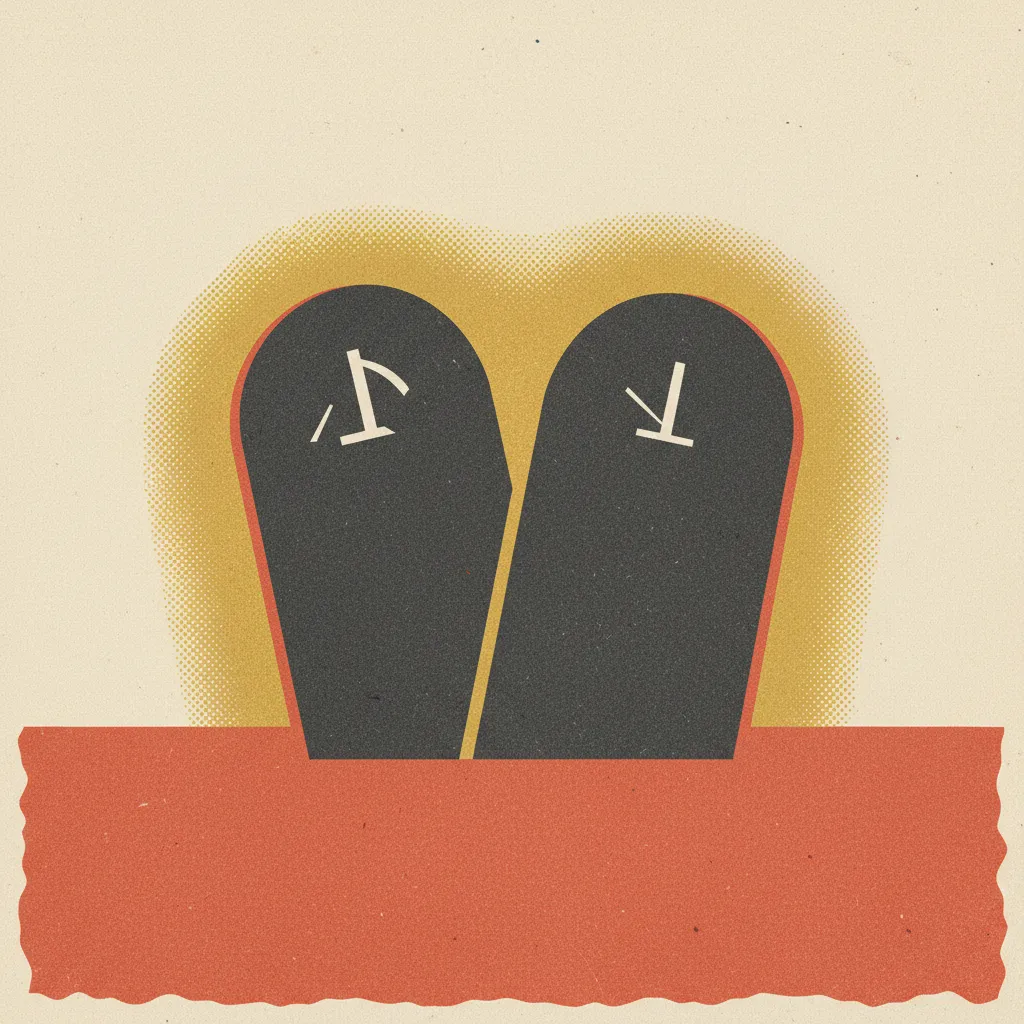
You already know how to do this. It happens before you decide to do it: you sit in a service and notice who is still on their phone, you read someone's public confession online and feel a small, unspoken relief that your sins are quieter than theirs, you watch a friend's life come apart and think, without quite meaning to, that you would have handled it better. In a small group you listen to someone else's prayer request and feel your own faith rise a little, not because anything in you has changed, but because theirs sounded messier. This isn't usually cruelty. It's arithmetic. You are trying to find your place on some invisible ledger, and the fastest way to locate yourself is to measure the distance between you and someone worse.
Jesus told a parable for people doing exactly this. Luke is specific about the audience: "To some who trusted in their own righteousness and viewed others with contempt, He also told this parable." Two men go up to the temple to pray. One is a Pharisee, careful and devout, the kind of man other people pointed to as proof that faith was working. The other is a tax collector, a man who made his living by cooperating with an occupying government against his own people, the kind of man other people pointed to as proof that some sinners were beyond the reach of decent religion.
The Pharisee's prayer is not fabricated piety. He really does fast twice a week, far beyond what the Law required. He really does tithe everything he acquires, down to the herbs in his kitchen. His discipline is real, and none of it needs to be mocked or explained away. But watch where his eyes go. He is praying, technically, to God, but the content of the prayer is entirely about the man standing somewhere behind him. "I thank You that I am not like the other men," he says, naming the categories one by one, and lands, almost as an afterthought, "or even like this tax collector." His gratitude has curdled into comparison. He is no longer measuring himself against a standard he might fail to meet. He is measuring himself against a person he has already decided he will beat.
Then Luke gives us the other man. "But the tax collector stood at a distance, unwilling even to lift up his eyes to heaven. Instead, he beat his breast and said, 'God, have mercy on me, a sinner!'" No comparison. No résumé. No categories to place himself above. Just a body turned away from the crowd and a sentence with nothing to hide behind. And Jesus says the plain, startling thing: "this man, rather than the Pharisee, went home justified." Not the disciplined one. Not the one with the better record. The one who stopped ranking himself and simply asked for mercy.
This is not a story about tax collectors being secretly better than Pharisees. If the tax collector had gone home and started comparing his humility to everyone else's pride, quietly congratulating himself for being the kind of sinner who at least knows he's a sinner, he would have become a Pharisee by nightfall, just with a different scorecard. The parable does not hand you a new ranking system with a different winner at the top. It dismantles the ranking system itself. "Everyone who exalts himself will be humbled, but the one who humbles himself will be exalted." The prayer that reaches God is not the one with the best comparison in it. It is the one with no comparison in it at all.