And forgive us our debts, as we forgive our debtors.
Matthew 6:12 (KJV)
The fifth petition is the first one that asks God to deal with something we did wrong.
EU•AN•GE•LION (YOO-AN-GEL-EE-ON) · εὐαγγέλιον — Good News
EUANGELION is a product of WokeGod LLC. Copyright © 2026 WokeGod LLC. All rights reserved.v0.8.39TermsPrivacyCookie PolicyCommunity GuidelinesContent Disclaimer
EU•AN•GE•LION (YOO-AN-GEL-EE-ON) · εὐαγγέλιον — Good News

Matthew says debts and Luke says sins. One is a ledger and the other is a wrong against God. The prayer asks that both be cleared, and that we learn to clear them for others.
Matthew 6:12, 14–15; Luke 11:4; Matthew 18:21–35; Luke 23:34
Title
And forgive us our debts, as we forgive our debtors.
Matthew 6:12 (KJV)
The fifth petition is the first one that asks God to deal with something we did wrong.
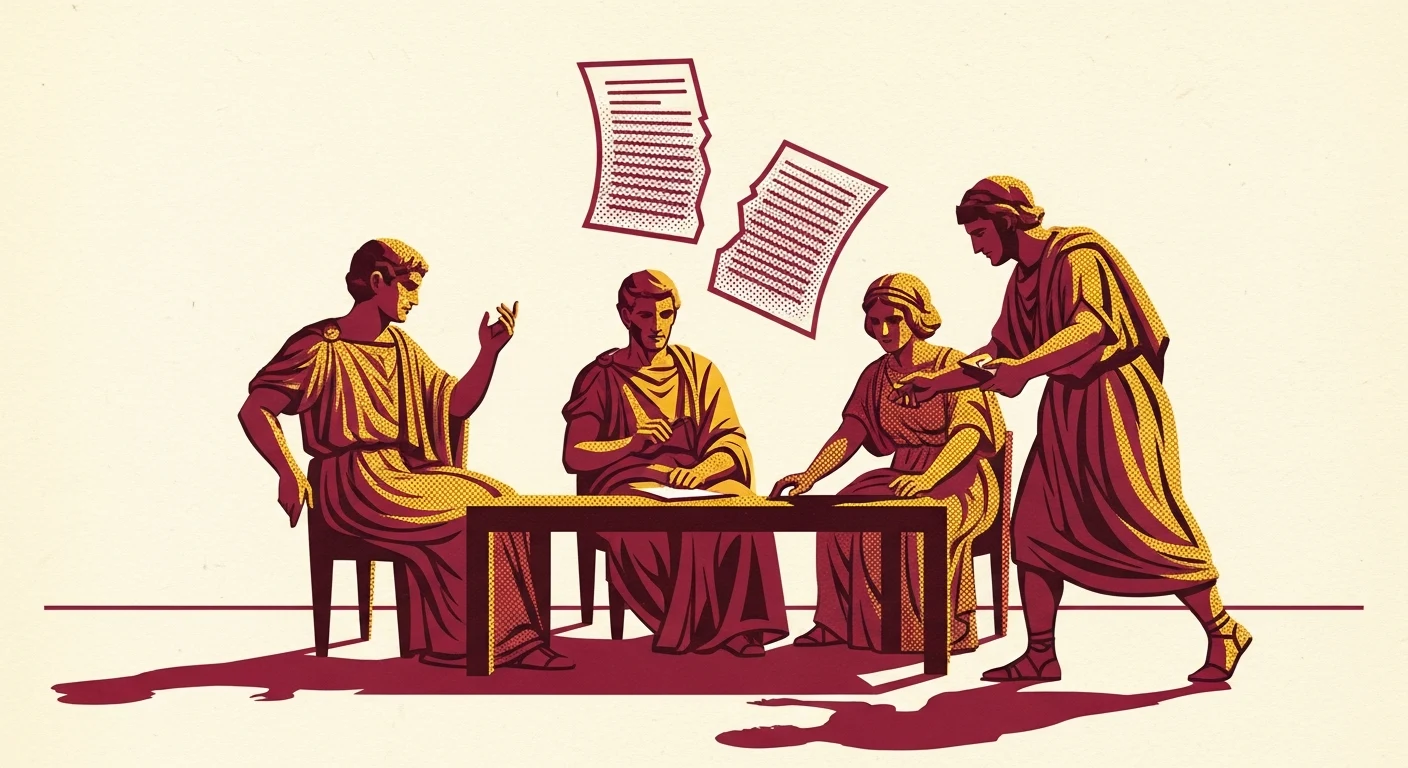
The fifth petition is the first in the prayer that admits we have done something wrong. Forgive us our debts. The word is plain. A debt is something owed. Matthew’s disciples would have heard the word in ordinary business, where a debt sat on a ledger until it was paid or forgiven.
The petition does not hide that. It says that we owe, and it asks that the account be cleared. The request is not that God overlook a small thing. It is that the account be settled by the one who has the power to settle it.
The second half of the sentence changes the picture. ‘As we forgive our debtors.’ We are not only people who owe. We are people who are owed things, and the petition asks us to release those debts to others as we ask God to release ours.
REFLECT
What is one thing you know you owe someone that you have not yet said out loud?
A Two-Minute Prayer
Forgive me what I owe you, and help me forgive what I am owed. Amen.
IN YOUR OWN WORDS
And forgive us our sins; for we also forgive every one that is indebted to us. And lead us not into temptation; but deliver us from evil.
Luke 11:4 (KJV)
Luke’s version of the fifth and sixth petitions, with ‘sins’ where Matthew has ‘debts.’
Matthew writes ‘debts’ and Luke writes ‘sins.’ Both words describe a real failing, and the prayer is the same in each. But the choice of word tells you how each Gospel sees the failing. Matthew sees it as a debt, something owed that must be paid or cancelled. Luke sees it as a sin, a wrong done against the person who is praying and against God.
The Old Testament already uses both pictures. In the law God gave Israel, a debt could be released in a set year. ‘Every creditor that lendeth ought unto his neighbour shall release it’ (Deuteronomy 15:2, KJV). The release was a public act. Everyone in the land knew that the ledger had been cleared, and the creditor who held the note had to let it go.
The prayer carries that picture into the relationship between a person and God. Our wrongs are not small matters that God can ignore, and they are not endless debts that we must work off. They are real, and they are released by the one whose release is public and final.
The two tenses do different work in the two Gospels. Matthew’s ‘as we have forgiven’ looks back. It asks God to forgive in the same way we have already released those who owed us. Luke’s ‘as we also forgive’ looks at the present. It describes forgiveness as an ongoing practice, something the praying person does again each day.
Both tenses teach something true. Some forgiveness is a single decision that has to be carried out for years. Some forgiveness is a repeated act, a choice made again each time the wrong comes back to mind. The prayer does not ask us to pick one. It asks God to deal with our wrongs as we are learning to deal with the wrongs of others.
The petition is not a trade. Matthew follows the prayer with a warning. ‘If ye forgive men their trespasses, your heavenly Father will also forgive you: But if ye forgive not men their trespasses, neither will your Father forgive your trespasses’ (Matthew 6:14–15, KJV). Read that carefully. Jesus is not saying that God’s forgiveness is earned by our forgiveness. He is saying that a heart which refuses to forgive has not received forgiveness in a way that has reached it. The petition describes the shape of a received mercy, and the shape is visible in the one who gives it.
For if ye forgive men their trespasses, your heavenly Father will also forgive you: But if ye forgive not men their trespasses, neither will your Father forgive your trespasses.
Matthew 6:14-15 (KJV)
Jesus expands the fifth petition in the verses right after the prayer.
And Joseph said unto them, Fear not: for am I in the place of God? But as for you, ye thought evil against me; but God meant it unto good, to bring to pass, as it is this day, to save much people alive.
Genesis 50:19–20 (KJV) (KJV)
Joseph, who had been wronged by his brothers, refuses to take God’s place as judge.
The Ten Thousand Talents
Peter asks Jesus how often he must forgive a brother who sins against him, and proposes seven times. Jesus answers, ‘Until seventy times seven’ (Matthew 18:22, KJV). Then he tells a parable about a servant who owed a king an enormous debt, was forgiven, and then refused to forgive a fellow servant who owed him a small sum. The forgiven servant is handed over to the jailers. The king’s judgment is that the one who received mercy must extend it. The parable is the best commentary on the fifth petition that the Gospel gives. The debt the servant could not pay is the debt the prayer asks God to cancel. The small debt owed to him is the debt the prayer asks us to release. Jesus is not describing two systems. He is describing one mercy, received and then given.
HISTORICAL CONTEXT
Matthew 18:21–35, KJV, the parable told in answer to Peter’s question about forgiveness. The parable belongs to the same Gospel as the Lord’s Prayer and is read here inside Matthew’s own account.
Forgiveness is hard because the debts are specific. A word said in anger at a family dinner, a promise broken by a friend, money that was never repaid, an injury that changed a marriage or a career. The petition does not ask us to pretend these did not happen. It asks God to deal with them honestly and to help us deal with them honestly too.
Forgiveness is not the same as saying nothing happened. Joseph’s brothers did real harm, and Joseph does not call it nothing. He says, ‘ye thought evil against me.’ Then he names what God did with it: ‘God meant it unto good.’ He does not deny the wrong. He refuses to let the wrong be the last word on his life, and he refuses to take God’s place as judge.
The practice has a few steps that are simple to describe and hard to do. Name the debt plainly, to yourself and, where it is safe, to God. Ask God for the grace to release it. Then decide, in the specific case, what release will look like. Sometimes it is a conversation. Sometimes it is a letter you never send. Sometimes it is a decision to stop rehearsing the wrong each time it comes up, and to ask for help each time it does.
If the wrong is ongoing, release does not mean staying in harm’s way. Forgiveness and safety are different things. A person can release a debt and still keep a boundary, and the prayer does not ask us to remove the boundary in order to be forgiven.
Where Forgiveness Sits in the Story
ANCIENT TRUTH
Israel’s law made release a public act. Debts were cleared in a set year, and the creditor was commanded to let the note go. The people knew that the land itself was a debt-free gift from God, and that their own release was part of his care for them.
This is the KINGDOM stretch of God’s story, where the king is teaching his subjects that their own release depends on whether they release others.
MODERN APPLICATION
Most people carry some ledger in their heads: the people who owe them, and the people they owe. The prayer asks God to clear the account for us in the same way we are learning to clear it for others. Many people find that releasing a debt is harder than they expected, and that the release happens slowly, in stages.
NEW TESTAMENT ECHO
Colossians 3:13 says, ‘Forbearing one another, and forgiving one another… even as Christ forgave you, so also do ye.’ The pattern of the prayer is the pattern of the gospel.
Forgiveness in the prayer is not an abstract principle. It was lived out in the one who taught it. Luke records Jesus on the cross saying, ‘Father, forgive them; for they know not what they do’ (Luke 23:34, KJV). The words are spoken while the people who wronged him are nailing him to a cross and dividing his clothes. He does not wait until the debt is paid to release it. He releases it while the wrong is being done.
This is the sod, the deepest layer the reading keeps returning to. The one who has the authority to cancel the debt is the one who bears its weight. Colossians says that Christ forgave us, and the prayer asks us to forgive as we have been forgiven. The petition is not a demand that we earn the release. It is a description of the release that has already come to us through the Son.
That does not make forgiveness easy. It means the forgiveness we give is always a response to a forgiveness we have received. We do not generate it from our own resources. We pass on what has been given, and we ask the Father to keep the account clear on both sides.
The cross also shows the cost. The release Jesus speaks from the cross was not cheap. It was paid for in the very act of praying it. A reader who wants to know what the fifth petition asks of them can look at the cross and see the shape of the answer. It asks for a release that is spoken in the middle of the wrong, and paid for by the one who speaks it.
Owen: A Composite Case
This is an illustrative case built to show how a long debt can be released in stages. It is not a report about one person. A man we will call Owen had a brother who borrowed a large sum and never repaid it. The brother moved away and stopped calling. Owen was angry for years, and the anger was tied to the money and to the sense that he had been made a fool.
He started the fifth petition in a small way. He did not say he forgave his brother in full. He said, ‘Forgive me my part in this anger, and help me release what I am owed.’ Over several months the sentence got shorter and more honest. One year he wrote a letter that named the debt and did not demand repayment. The letter was not answered. Owen found that the release had happened in him anyway, and the anger no longer ran the house.
The debt was never fully repaid. What changed was Owen’s willingness to let God hold the account, and his refusal to keep his brother in a ledger of grievances.
A Practice for Today
Write one debt on a card or in a note. Write only its name, not the whole story. Then keep the card where you will see it at lunch.
Name
Write the debt in three words or fewer.
Read
Say Matthew 6:12 once, slowly, with the card in front of you.
Leave
Pray the petition over the card before the day closes.
One thing before the day closes. The fifth petition is the place in the prayer where God’s grace and our practice meet most directly. We ask to be forgiven, and we ask in the same breath to forgive. The two requests are not a bargain. They are the shape of a life that has been released and is learning to release.
For some of us, the first request is easier than the second. We can accept grace for ourselves and still hold a grudge against someone else. For others, it is the reverse: we know how to release other people but find it hard to believe that we have been released. The petition holds both halves. It asks God to clear the account for us, and it asks him to help us clear it for others.
Tomorrow the prayer moves to the final two petitions, about temptation and evil. The forgiven life does not stop being tested. It is kept by the one who forgave it, and the next petitions ask for that keeping.
Prayer
Father, I owe more than I can pay, and you have released me in Christ. Forgive me my debts as I begin to release those who owe me. Show me the one debt I have been holding this week, and give me the grace to name it, release it, and leave the account with you. Amen.
BREATH PRAYER
Forgive us our debts — as we forgive
IN YOUR OWN WORDS
Today's Commitment
This week I will name one debt I am holding against someone, pray the fifth petition about it, and decide one concrete step of release.
LEAVING AT THE CROSS
RECEIVING FROM THE CROSS
One Question
In Matthew 6:12, which tense is used for ‘as we have forgiven our debtors’?
Sources & Further Study
Greek of Matthew 6:12 and Luke 11:4
ὀφειλήματα (opheilēmata), ἀφήκαμεν (aphēkamen), ἁμαρτίας (hamartias), and ἀφίομεν (aphiomen), verified at the Matthew 6 and Luke 11 interlinear pages on Bible Hub, Strong’s G3783, G863, G266, and G863 as printed there. The petition for temptation, Matthew 6:13, uses εἰσενέγκῃς (eisenenkēs) and πειρασμόν (peirasmon), G1533 and G3986.
RELATED SCRIPTURES
Deuteronomy 15:1–2 (KJV)
The release of debts at the end of every seven years.
Matthew 18:21–35 (KJV)
The parable of the unforgiving servant, told in answer to Peter’s question.
Colossians 3:13 (KJV)
Forgiving one another, even as Christ forgave you.
Luke 23:34 (KJV)
Father, forgive them; for they know not what they do.
REFLECT
What is the debt you are most ready to release, and what is the first step it would take?
Finished reading? Mark this day read.
BEFORE YOU GO
Anything you want to keep from today?
EUANGELION is a product of WokeGod LLC. Copyright © 2026 WokeGod LLC. All rights reserved.v0.8.39TermsPrivacyCookie PolicyCommunity GuidelinesContent Disclaimer