He who testifies to these things says, ”Yes, I am coming soon.” Amen. Come, Lord Jesus! The grace of the Lord Jesus be with all the saints. Amen.
Revelation 22:20-21 (BSB)
Ἔρχου, Κύριε Ἰησοῦ.
EU•AN•GE•LION (YOO-AN-GEL-EE-ON) · εὐαγγέλιον — Good News
EUANGELION is a product of WokeGod LLC. Copyright © 2026 WokeGod LLC. All rights reserved.v0.8.33TermsPrivacyCookie PolicyCommunity GuidelinesContent Disclaimer
EU•AN•GE•LION (YOO-AN-GEL-EE-ON) · εὐαγγέλιον — Good News
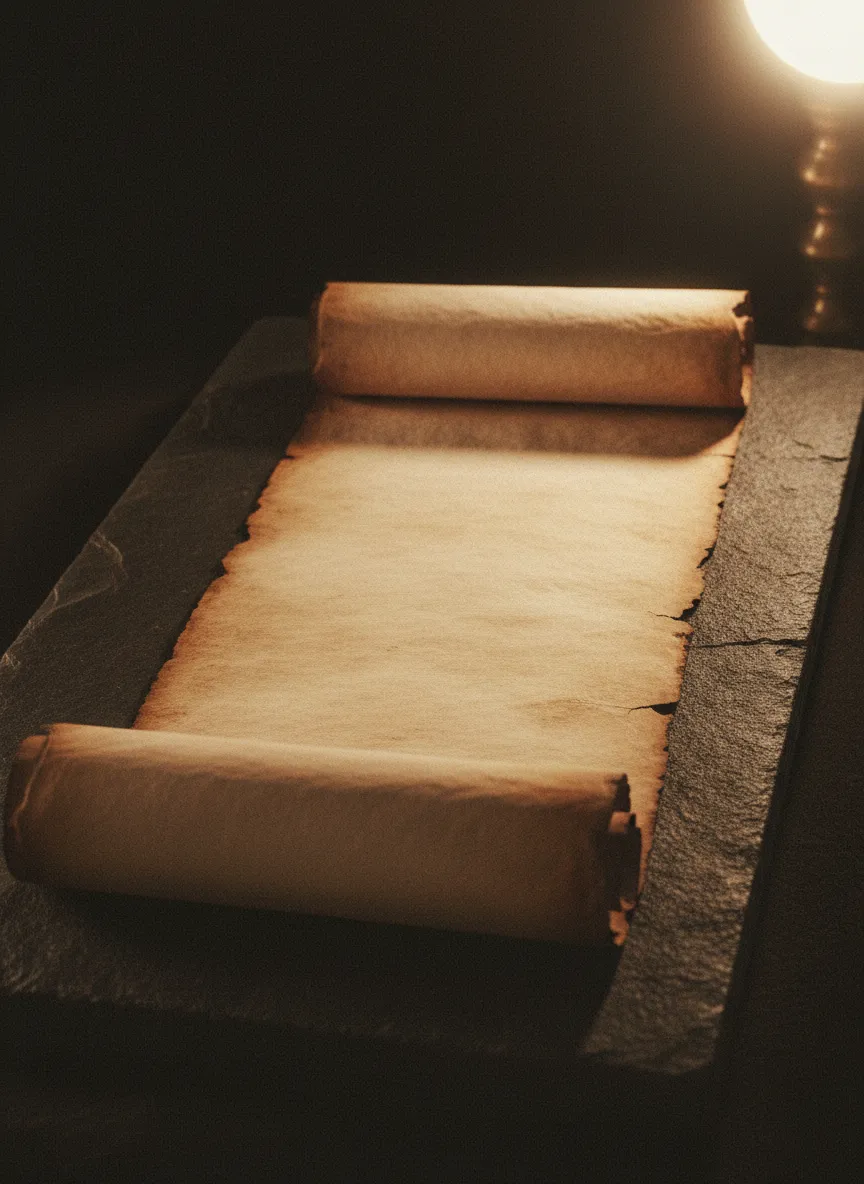
The Bible does not end with a doctrine or a command. It ends with a prayer, addressed to a Person, longing for Him to come.
Revelation 22:20-21
Opening
He who testifies to these things says, ”Yes, I am coming soon.” Amen. Come, Lord Jesus! The grace of the Lord Jesus be with all the saints. Amen.
Revelation 22:20-21 (BSB)
Ἔρχου, Κύριε Ἰησοῦ.
“Bible in a Year” — Euangelion riso series art
The Bible’s last sentence is not a command to us; it is a prayer from us, addressed to a Person we are still waiting for. Scripture ends with the church on tiptoe.
You have read for a year. Three hundred sixty-five days of beginnings and exiles, kings and prophets, a manger and a cross and an empty tomb. And here, on the last page, the whole library narrows to a single exchange of two short sentences.
First, a promise: “Yes, I am coming soon.” The speaker is the one who has testified to everything in the book – the risen Jesus Himself, who two verses earlier called Himself the Alpha and the Omega, the First and the Last (Revelation 22:13). He does not end the Bible by summarizing its lessons. He ends it by giving His word that He will return.
Then, an answer. The church does not respond with a theology, a program, or a resolution. She responds with three words: “Come, Lord Jesus.” The promise comes from heaven; the prayer rises from earth, and they meet on the final line. The Bible closes not on a period but on a longing – a door left open, footsteps expected.
The Porch Light Left Burning
There is a house in the town where my mother grew up that always had a light on over the back door. For years I assumed it was carelessness. Then someone told me the reason. A son had gone off to a war and not written for a long time, and his mother could not bring herself to be certain he was gone. So she left the light burning, every night, so that if he ever came up the lane in the dark he would know the house was still his, still waiting, still home.
That is what the last line of the Bible sounds like. Not a tidy ending, where the family agrees the absent one is never coming and turns the light off. An open ending. A light left burning. “Come, Lord Jesus” is the prayer of a household that has decided, against the long dark and the unanswered years, to keep the door unlocked and the lamp lit.
Faith, in the end, is not first a set of conclusions. It is a posture. It is the way a person waits.
Closing the Bible is meant to leave you not with a finished argument but with a lit lamp – the waiting posture of a people who still expect the One who promised to come.
The Sword Down, the Gate Open
Hold the first page of the Bible against this last one. On the third page of Scripture, a man and a woman are driven out of a garden, and God stations cherubim and a whirling sword of flame to guard the way to the tree of life (Genesis 3:24). The story begins with the tree of life closed off, the way home barred, an exile under a drawn blade. Now read where the year has carried you. In Revelation 22, the angel shows John the tree of life again – no longer guarded, growing on both sides of a river that flows from the throne, bearing fruit every month, its leaves for the healing of the nations (Revelation 22:1-2). The sword is gone. The gate is open. The tree the flaming blade once kept us from is now standing in the middle of the city we are invited into. The whole Bible is the distance between those two trees. It is the story of how the sword came down and the gate came open – and it cost the One who promises “I am coming soon” His own blood to do it. That is why the prayer can be “Come.” The way back was not forced; it was opened, by the Lamb who was slain.
HISTORICAL CONTEXT
Revelation was written to seven real churches in Asia Minor near the end of the first century, congregations under pressure – some facing exclusion, some facing worse for refusing to call Caesar ‘Lord.’ To people who had everything to fear from waiting, John hands not an escape but a name to call into the dark: “Come, Lord Jesus.” The prayer was forged by suffering people, not comfortable ones.
The Bible opens “In the beginning, God created” and closes “The grace of the Lord Jesus be with all the saints.” It begins with creation and ends with grace. Everything between the first verse and the last is the account of how a holy God carried sinful people from one to the other – from being made to being saved.
BRIDGE TO CHRIST
ANCIENT TRUTH
Jesus’ last recorded promise in Scripture is “Yes, I am coming soon,” and the church’s last recorded prayer is “Come, Lord Jesus” – a promise and a longing, sealed with His grace upon all the saints.
The cry runs back through the whole canon you have read this year. Israel waited for a coming King through every exile and every prophet. The first believers prayed Marana tha over bread and wine (1 Corinthians 16:22). John, an old man on a prison island, ends the Bible with the same three words. The longing is one long thread, and you are now holding the end of it.
MODERN APPLICATION
We are good at endings that close the book and move on. The Bible refuses that ending. It leaves us living in the middle of an unfinished sentence – already redeemed, not yet home, asked to spend our days as people who genuinely expect Someone. To pray “Come, Lord Jesus” is to let that expectation reshape how you wait, work, grieve, and hope this ordinary week.
NEW TESTAMENT ECHO
Jesus had already promised it in the upper room: “If I go and prepare a place for you, I will come back and welcome you into My presence, so that you also may be where I am” (John 14:3). Revelation’s “I am coming soon” is that promise, kept in view until the very last line of Scripture – and “every eye will see Him” when it is fulfilled (Revelation 1:7).
REFLECT
If the Bible ends with a longing and not a conclusion, what would change in your week if you actually lived as someone expecting Jesus to come?
PRAYER
Posture: expectant-hope
Lord Jesus, I have read for a year, and it ends here, with You. Thank You that the way to the tree of life is no longer guarded by a sword but opened by Your blood. You said You are coming soon, and I believe You. So I pray the oldest prayer Your people know: Come, Lord Jesus. Until You do, keep the lamp of my heart burning, and let Your grace – the last word of Your whole book – be enough for me today. Amen.
IN YOUR OWN WORDS
TAKEAWAY
Today, close the year by praying the Bible’s last prayer out loud, slowly, three times: “Come, Lord Jesus.” Then pick one place in your life where you have stopped expecting Him – a relationship, a wound, a hope you shelved – and bring it to Him as something you are still waiting on Him to come into.
LEAVING AT THE CROSS
RECEIVING FROM THE CROSS
CHECK YOUR UNDERSTANDING
FOR REFLECTION
FOR ACCOUNTABILITY PARTNERS
FURTHER READING
RELATED SCRIPTURES
Genesis 3:24
So He drove out the man and stationed cherubim on the east side of the Garden of Eden, along with a whirling sword of flame to guard the way to the tree of life.
Revelation 22:1-2
Then the angel showed me a river of the water of life, as clear as crystal, flowing from the throne of God and of the Lamb down the middle of the main street of the city. On either side of the river stood a tree of life, bearing twelve kinds of fruit and yielding a fresh crop for each month. And the leaves of the tree are for the healing of the nations.
1 Corinthians 16:22
If anyone does not love the Lord, let him be under a curse. Come, O Lord!
John 14:3
And if I go and prepare a place for you, I will come back and welcome you into My presence, so that you also may be where I am.
FOR DEEPER STUDY
Read the closing two chapters as the answer to Genesis 1-3: a new heaven and new earth, the city with open gates, the tree of life unguarded, and the last prayer of the Bible. Then turn back to Genesis 1:1 and read the first sentence again, holding both ends of the story at once.
The Last Writer of Scripture
By tradition the apostle John, an old man exiled to the island of Patmos for the word of God and the testimony of Jesus (Revelation 1:9). He had walked with Jesus in Galilee, leaned against Him at the last supper, and stood near the cross. Decades later, alone on a prison island, he is given a vision of the end of all things – and given the task of writing the closing words of the entire Bible.
He who testifies to these things says, “Yes, I am coming soon.” Amen. Come, Lord Jesus!
LESSON FOR US
The man who knew Jesus longest did not end his life with answers but with longing. After everything he had seen, his final written words were a prayer for Jesus to come. If the disciple closest to Jesus still waited with that ache, our own waiting is not a failure of faith – it is the shape of it.
Finished reading? Mark this day read.
BEFORE YOU GO
Anything you want to keep from today?
EUANGELION is a product of WokeGod LLC. Copyright © 2026 WokeGod LLC. All rights reserved.v0.8.33TermsPrivacyCookie PolicyCommunity GuidelinesContent Disclaimer